



Since August 2, 2026, a new obligation stemming from the European regulation on artificial intelligence (the AI Act) has concretely applied to the digital daily life of French citizens: deepfakes and AI-generated content must now be labeled. A discreet regulatory shift, but one that changes the way internet users will, in theory, tell the real from the synthetic online.
What Article 50 of the AI Act Actually Requires
Article 50 of the European AI regulation imposes two distinct obligations. On one side, providers of generative AI systems must inform users that they are interacting with artificial intelligence and must technically mark the content produced, using a machine-readable digital watermark. On the other side, deployers — that is, any company or platform that distributes this content to the public — must visibly label deepfakes as well as certain informational texts published without human review.
The definition adopted is broad: a deepfake is considered to be any content generated or manipulated by AI that resembles real people, places, objects, or events to the point that it could be mistaken for authentic. The example often cited by experts is a realistic photo of a protest that never took place, or a building wrongly shown as being on fire.
A Two-Speed Timeline
- Generative AI systems already on the market before August 2, 2026 have until December 2, 2026 to comply with machine-readable marking.
- Systems placed on the market from August 2, 2026 onward must comply with no additional grace period.
- Conversational chatbots also fall within the scope: every interaction must clearly signal to the user that they are communicating with an AI.
Fines That Can Reach €15 Million
Failure to comply with these obligations exposes companies to fines of up to 15 million euros, or a percentage of global revenue for the largest groups, based on the progressive scale set out in the AI Act. This is enough to push image, video, and text generation platforms to quickly revamp their interfaces to include visible labeling.
Why This Measure Concerns Everyone
Beyond the major platforms, the measure also affects website publishers, communication agencies, and content creators who use generative AI tools to illustrate their publications. An AI-generated visual used without explicit mention in a context that could create confusion can now constitute a violation, regardless of any intent to deceive. The European Commission is counting on this increased transparency to limit visual disinformation, which is especially sensitive during election periods or during news events that stir strong emotions.
To keep up with digital regulation news and its practical consequences, check out our other articles in Internet & Digital Life, Digital & High Tech, and Law and Justice.
Frequently Asked Questions
Who is affected by the deepfake labeling requirement?
Providers of generative AI systems (technical content marking) and deployers who distribute this content to the public (visible labeling), whether they are platforms, companies, or website publishers.
Does a simple AI-generated visual always need to be flagged?
Yes, as soon as it realistically depicts real people, places, or events and could be mistaken for authentic content; works that are clearly artistic or stylized generally fall outside this strict scope.
What do companies that fail to comply risk?
Fines of up to 15 million euros, or a percentage of annual global revenue for the largest companies, based on the penalty scale set out in the European AI regulation.
Sources
- Blog du Modérateur – AI content labeling becomes mandatory in the EU
- OIA.fr – AI Act: AI content labeling mandatory since August 2, 2026
- France Épargne – Deepfakes: mandatory labeling starting August 2, 2026
Hydrogen Turbine: Electricity Generated by Controlled Explosions
What if we could generate electricity from small, perfectly controlled explosions, with no mechanical compressor at all? That's the challenge taken on by German engineers at the Karlsruhe Institute of Technology (KIT), who have just run a new kind of…
On August 5, 2026, a SpaceX Rocket Stage Will Hit the Moon: What Scientists Will Observe
On August 5, 2026, a piece of SpaceX rocket will crash into the Moon. The object is nothing like an exploration spacecraft: it's a Falcon 9 upper stage turned space junk, adrift for eighteen months. Far from being a mere…
Perseids: Why the Night of August 12-13 Will Be Exceptional for Watching Shooting Stars
Every summer, the same question comes up among stargazing enthusiasts and casual onlookers alike: what's the best night to watch shooting stars? This year, the answer is particularly clear-cut. On the night of August 12-13, the sky will host the…

France 2030: The Tech Start-Ups Rewarded by the French State
On September 16, 2026, in Paris, the French government honored 109 winners at the France 2030 innovation competition ceremony, in the presence of Anne Le Hénanff, Minister for Artificial Intelligence and Digital Affairs, and Bruno Bonnell, Secretary General for Investment.…
An Unexpected Comet Spotted by the Euclid Space Telescope
A telescope designed to photograph billions of distant galaxies wasn't supposed to cross paths with a visitor from our own solar system. Yet that's exactly what just happened to Euclid, the European Space Agency's (ESA) space telescope, which unexpectedly captured…
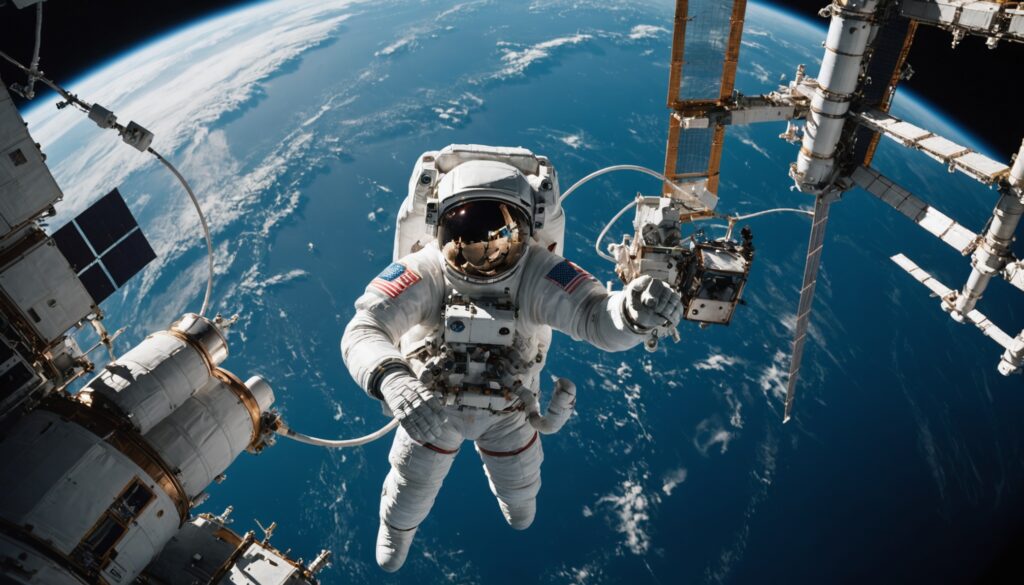
Sophie Adenot in Space: The Technical Behind-the-Scenes of an Eventful Spacewalk
On August 18, 2026, Sophie Adenot became the first French astronaut to perform a spacewalk. It was a widely celebrated feat, but the story didn't end there: the mission had to be repeated a week later, on August 25, to…

Ancient Life on Mars: What the Rock Studied by Perseverance Really Reveals
NASA's Perseverance rover keeps digging through Jezero Crater on Mars. A study published in late June 2026 in the journal Science Advances details the discovery of hundreds of traces of complex organic carbon in the ancient river valley of Neretva…
ChatGPT Brings Ads to Your Conversations: What's Changing in France
Until now, chatting with ChatGPT remained a space free of banners or ads. That changes starting August 24: OpenAI is rolling out its first ads inside ChatGPT in France, along with thirty other European markets. After six months of testing…
This article was written with the help of artificial intelligence. Editorial policy