


What if an algorithm, alone, had designed the molecule capable of protecting us from a future pandemic? That's exactly what has just happened at the University of Cambridge. A universal vaccine against coronaviruses, designed from start to finish by artificial intelligence without a single researcher drawing out any sequence by hand, has just successfully passed its first trial in humans. It's enough to reshuffle the deck for a pharmaceutical industry used to much slower development cycles.
Named pEVAC-PS, this vaccine candidate is the result of a collaboration between Cambridge's viral zoonoses laboratory, led by Professor Jonathan Heeney, the Cambridge spinout company DIOSynVax, and the University of Southampton. Their work, published in the Journal of Infection in June 2026, marks a world first: a vaccine whose active ingredient was entirely generated through machine learning, based on the analysis of thousands of genetic sequences from known coronaviruses.
How AI Designed This Universal Vaccine
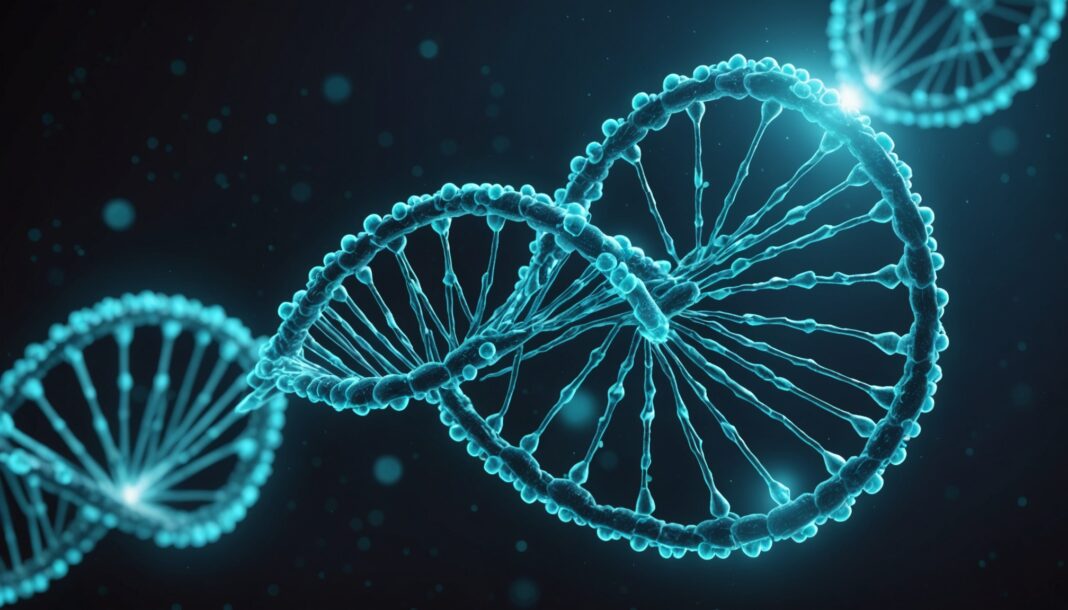
Rather than targeting a single viral strain, as the first-generation Covid vaccines did, the algorithm was tasked with a far more ambitious mission: identifying, across dozens of viral genomes, the patterns common to the entire coronavirus family. The result is a synthetic “super-antigen,” theoretically capable of triggering an immune response against several strains at once, including viruses currently circulating in bats that could one day cross the species barrier. This approach fits into a broader trend we've been following closely in our high-tech section: that of artificial intelligence that no longer merely assists research but becomes itself a source of scientific breakthroughs, as our article on the future of general artificial intelligence already illustrated.
Notably, the molecule designed by the AI was not injected with a traditional syringe. The 39 healthy volunteers, aged 18 to 50, received their dose via a needle-free micro-jet of fluid, an administration method that avoids needle-related phobias while ensuring efficient penetration of the vaccine DNA into tissue.
A Clinical Trial That Delivers
On the safety front, the published results are unambiguous: no significant adverse effects were observed at any of the dose levels tested. Even better, the vaccine did indeed trigger measurable immune responses against SARS-CoV-2, against the original 2003 SARS virus, and against several related coronaviruses carried by bats. These responses are described as “modest” by the study's authors, who are already calling for a phase 2 trial to fine-tune the dosage and confirm the extent of protection.
This breakthrough echoes other recent technological disruptions in the health sector, such as next-generation monoclonal antibodies: our article on the new monoclonal antibody against infant bronchiolitis already showed how modern immunology is moving beyond traditional vaccine protocols.
The key takeaways from this study can be summarized as follows:
- An active ingredient entirely designed through computer simulation and machine learning, with no human involvement in the molecular design.
- Needle-free administration via a fluid micro-jet, on 39 healthy volunteers.
- No significant adverse effects observed at this stage.
- Immune responses detected against several coronaviruses, including animal-origin strains with pandemic potential.
- A scientific publication in the Journal of Infection in June 2026, followed by the official announcement from the University of Cambridge in early September.
Toward the End of Annual Vaccine Boosters?
The stakes go far beyond Covid-19 alone. By relying on a “generic” antigen capable of recognizing an entire family of viruses rather than a single variant, this technology could eventually reduce the need to reformulate new boosters every year, as is currently the case for seasonal flu. Researchers even mention potential applications beyond coronaviruses, extending to other virus families with pandemic risk.
This ability of AI to process massive volumes of genomic data to extract patterns invisible to the human eye isn't unique to healthcare: it ties into issues we've already explored regarding big data management technologies, where processing complex data at scale is becoming a decisive competitive advantage. Still, there's a long road ahead before any potential market approval: a phase 2 trial, then a phase 3 trial on much larger cohorts, will be needed to confirm the clinical efficacy of pEVAC-PS. It's a development worth following closely in our digital life section, where technology and health increasingly intersect.
Frequently Asked Questions
Is this vaccine already available to the general public?
No. Only a phase 1 trial, focused on safety, has been conducted so far, involving 39 volunteers. A phase 2 trial, followed by a larger-scale phase 3 trial, will be necessary before any market approval.
How does this vaccine differ from conventional Covid vaccines?
First-generation vaccines targeted a specific strain of SARS-CoV-2. pEVAC-PS, on the other hand, targets patterns common to the entire coronavirus family (Sarbecovirus), thanks to a synthetic antigen designed by artificial intelligence rather than through traditional laboratory methods.
Why is there no needle involved?
The vaccine is administered via a fluid micro-jet, a technique that propels the vaccine DNA through the skin without using a needle. It reduces apprehension related to injections and, in the long run, could make mass vaccination campaigns easier to carry out.
Sources
- University of Cambridge — New universal vaccine technology could protect us from future virus outbreaks
- ScienceDaily — AI-designed universal coronavirus vaccine passes first human trial
- MedicalXpress — AI-designed universal vaccine clears first human trial

Ancient Life on Mars: What the Rock Studied by Perseverance Really Reveals
NASA's Perseverance rover keeps digging through Jezero Crater on Mars. A study published in late June 2026 in the journal Science Advances details the discovery of hundreds of traces of complex organic carbon in the ancient river valley of Neretva…
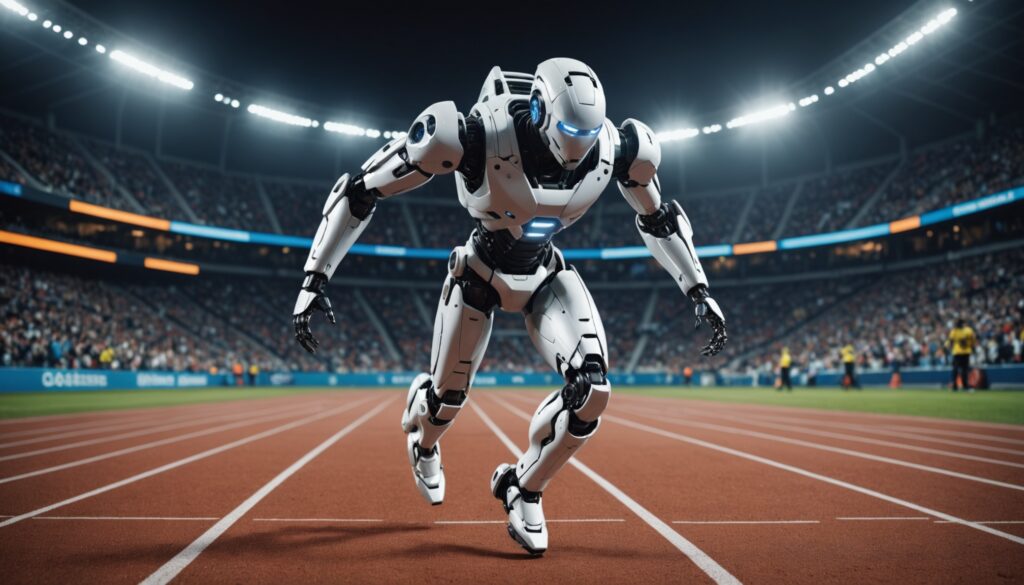
Humanoid Robot Breaks Usain Bolt's 100-Meter World Record
The Usain Bolt myth has just fallen — though not on a human track. On the weekend of August 22 and 23, 2026, in Beijing, a humanoid robot ran the 100 meters in 9.39 seconds, breaking the 9.58-second world record…
ChatGPT Brings Ads to Your Conversations: What's Changing in France
Until now, chatting with ChatGPT remained a space free of banners or ads. That changes starting August 24: OpenAI is rolling out its first ads inside ChatGPT in France, along with thirty other European markets. After six months of testing…

Apple Ad With a Baby: Why Italy Demanded Its Removal
An Apple ad showing a very young child with an iPhone has just disappeared from a large billboard in Milan. The Apple brand had to pull the visual after an Italian public authority in charge of child protection intervened, reigniting…

A Muon Laser That Can See Through Concrete
An international team of physicists has achieved an unprecedented milestone in imaging dense materials. Using an ultra-powerful muon laser, researchers at the Extreme Light Infrastructure – Nuclear Physics (ELI-NP) facility in Romania managed to photograph an object hidden behind two…

France 2030: The Tech Start-Ups Rewarded by the French State
On September 16, 2026, in Paris, the French government honored 109 winners at the France 2030 innovation competition ceremony, in the presence of Anne Le Hénanff, Minister for Artificial Intelligence and Digital Affairs, and Bruno Bonnell, Secretary General for Investment.…

Mercury: European Probe BepiColombo Completes Its Riskiest Maneuver Yet
Eight years of travel, 63 million kilometers from the Sun, and a maneuver that one of the mission's officials compared to… a rocket launch. The European probe BepiColombo has just cleared the trickiest stage of its mission to Mercury, the…

Temporal Photonic Crystal: Physicists Tame Light at Lightning Speed
What if light could be shaped, slowed down, or amplified in the blink of a trillionth of a second, without spending an ounce of extra energy? That's exactly what a French-German research team has just achieved, bringing together French laboratories…
This article was written with the help of artificial intelligence. Editorial policy