




Spanish olive oil is going through an unprecedented episode: rather than letting prices collapse under the weight of an exceptional harvest, the government has chosen to voluntarily pull part of the production off the market. Since November 6, mills across the country have been required to hold back 188,000 tons of olive oil, or 12% of their production, until September 30, 2027. The decision reaches far beyond Spain's borders and raises questions about how global agricultural markets absorb years of abundance.
A record harvest that threatened to send prices tumbling
Spain, the world's leading olive oil producer, is expecting an exceptional 2026-2027 season: around 1.6 million tons, up 23% from the previous campaign. That's good news for consumers, but it worries producers. In early November, the price paid to mills hovered around 3 euros per kilo, compared to nearly 4 euros a year earlier. Without intervention, the flood of oil onto the market risked accelerating that decline even further and weakening thousands of farms.
How this market withdrawal works
Formalized by decree APA/1145/2026 of October 29 and published in the Boletín Oficial del Estado (Spain's official state gazette), the measure lets each mill choose which category of oil to set aside — extra virgin, virgin, or lampante (lowest-grade, for refining) — and where to store it, whether in its own tanks or with an outside provider. The volume in question must stay off the market until the end of the campaign, in September 2027. The goal isn't to destroy the product, but to smooth out supply over time and avoid a sudden price shock — a mechanism already used in other agricultural sectors but rarely applied at this scale in Europe.
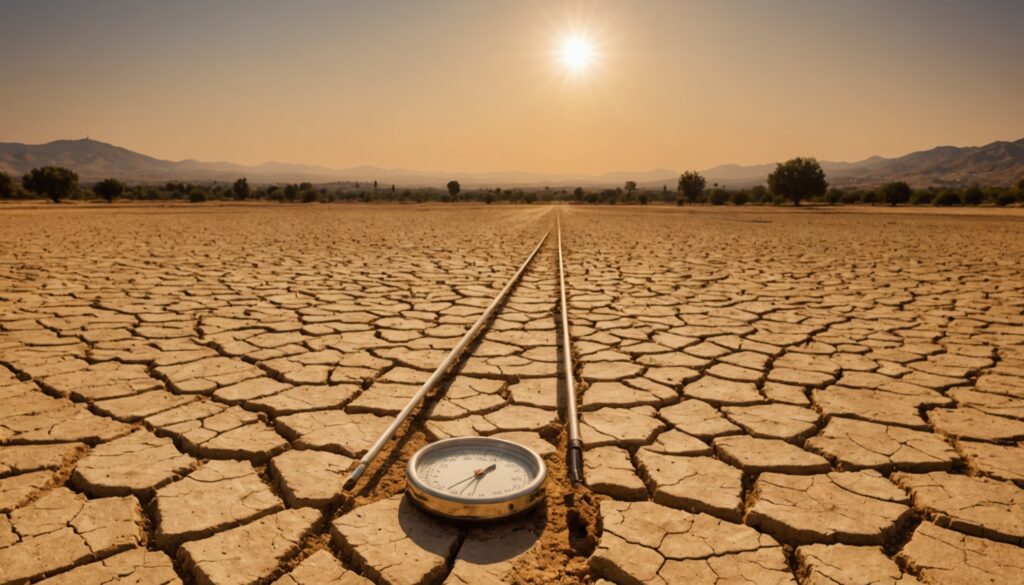
The weather is also part of the story: some of this season's abundance stems from favorable conditions, following several years of drought that had driven production down. The record heat waves seen in Spain in recent years show just how dependent olive yields remain on increasingly pronounced climate variability, making these regulatory mechanisms more necessary with each cycle.
A mechanism that goes beyond olive oil
This kind of supply management isn't unique to olive oil. The cocoa and fruit and vegetable sectors see similar regulatory dynamics in response to production swings. We saw this recently with chocolate, whose prices remain high despite a pullback in cocoa prices, as manufacturers adjust their margins with a lag. Conversely, some fresh products take the full brunt of harvest swings: the food inflation in fresh products seen in recent months illustrates how hard it is to smooth out prices when no withdrawal mechanism exists. Here, Spain is trying the opposite approach: getting ahead of the problem rather than enduring it.
For industry players, this public intervention also touches on issues of finance and agricultural risk management, since it effectively turns part of the harvest into a strategic reserve instead of an immediate sale.
What does this mean for consumers?
- In the short term, the measure should limit the drop in prices rather than push them back up: oil remains abundant, and only a fraction is being withdrawn.
- The coming months will be closely watched across food news, since Spanish olive oil accounts for a major share of European supply.
- The system could serve as a model if other producing countries, facing similar surpluses, look to stabilize their own markets.
Frequently Asked Questions
Why is Spain pulling olive oil off the market?
To prevent a collapse in the prices paid to producers, following an exceptional 2026-2027 harvest estimated at 1.6 million tons, up 23% from the previous campaign.
How long will the oil stay in storage?
The volumes involved, roughly 188,000 tons, must stay off the market until September 30, 2027, the end date of the 2026-2027 campaign.
Will this measure push up prices on store shelves?
Nothing suggests that at this stage: the goal is to stabilize the prices paid to producers in the face of an abundant supply, not to create a shortage for consumers.
Sources

Total Solar Eclipse in Europe: A Rare Phenomenon Finally Returns
On August 12, 2026, the European sky put on a show the continent hadn't seen in nearly three decades: a total solar eclipse. Starting in a remote region of Siberia, the Moon's shadow swept across Greenland, Iceland, then northern Spain…
International Space Summit in Paris: What's at Stake on September 9-10, 2026
Rarely has a diplomatic conference looked so far toward the sky. On September 9 and 10, 2026, France is hosting an International Space Summit at the Grand Palais in Paris, expected to bring together nearly 120 foreign delegations. Announced at…

World's Longest Cargo Flight: Boeing 777 Links Scotland to Australia Nonstop
A world-record cargo flight has just been set across two hemispheres, and it's enough to make engineers and aviation enthusiasts alike feel dizzy. On August 4 and 5, 2026, a Boeing 777 Freighter operated by American airline National Airlines flew…

Asteroids: China and Japan Pull Off a Double Space Feat Three Days Apart
The first week of July 2026 will be remembered as a rare moment in space exploration: three days apart, two Asian probes successfully rendezvoused with some of the smallest asteroids ever approached. The Chinese probe Tianwen-2 settled in near Kamoʻoalewa,…

Victorian Solar Storm: A Nearly Two-Century-Old Mystery Finally Solved
A train departing sixteen minutes late, a telegraph going haywire on its own, and a century and a half later, scientists reopening the case: this is the story, as quiet as it is fascinating, of a Victorian solar storm whose…
Jellyfish in the Channel: Why the Gravelines Nuclear Plant Had to Shut Down Its Reactors
The weekend of August 8-10, 2026 once again highlighted a little-known vulnerability of France's nuclear fleet: the proliferation of jellyfish in the English Channel. At the Gravelines nuclear plant in northern France, three reactors had to be shut down and…

Record Heat: July 2026 Confirmed Among the Hottest Months Ever Measured
Data from the European Copernicus service has just confirmed it: July 2026 ranks among the hottest months ever recorded worldwide since modern measurements began in 1850. The oceans, for their part, broke an all-time record for surface temperature. Beyond the…

PISA: Gap Between Advantaged and Disadvantaged Students Widens in France
On September 8, the OECD released the results of its PISA 2025 survey, conducted among more than 760,000 15-year-old students in 91 countries and regions. In France, the findings go beyond a simple drop in the rankings: it is above…
This article was written with the help of artificial intelligence. Editorial policy