





Data from the European Copernicus service has just confirmed it: July 2026 ranks among the hottest months ever recorded worldwide since modern measurements began in 1850. The oceans, for their part, broke an all-time record for surface temperature. Beyond the numbers, what this new record signals for the coming months is what really deserves attention.
A Record Confirmed by Multiple Agencies
According to Copernicus, the average surface air temperature reached 16.90°C (62.42°F) in July 2026, placing the month second among the hottest Julys on record, tied with July 2024 and just behind July 2023. On the American side, NOAA and NASA go further: for both agencies, July 2026 is tied with July 2024 at the top of the rankings since 1850. These slight discrepancies between institutes stem from different calculation methods, but the underlying conclusion doesn't change from one agency to another.
The clearest signal, however, comes from the oceans: average sea surface temperature (excluding polar regions) reached 20.96°C (69.73°F), surpassing the previous record of 20.89°C set in July 2023. A warmer ocean stores more energy and later releases it as atmospheric humidity and heat, with consequences that are directly measurable in the climate of the following months.
France and Western Europe on the Front Line
In France, July 2026 was the hottest July ever measured, with a temperature anomaly of +3.8°C compared to normal averages. Western Europe as a whole experienced its hottest June-July period on record, a combination of soil drought and heat that fueled the wildfires seen this summer in several Mediterranean countries.
This context isn't a side note for readers: it directly affects back-to-school and fall decisions, whether it's resuming outdoor sports activities, planning short fall getaways, or staying alert for people sensitive to heat (young children, the elderly, and people with chronic conditions).
What This Record Actually Changes
- More likely late-season heat episodes in September, as the inertia of warmed oceans continues to influence air masses for weeks after the summer peak.
- An increased risk for agriculture already weakened by drought, with possible repercussions on the prices of certain fresh produce in the fall.
- A tourist season being rethought by many travelers, who increasingly favor cooler destinations or off-peak periods to avoid heat spikes.
- Extended health vigilance, with authorities recommending that heat-protection habits continue beyond the month of August alone.
A Signal Consistent With the Underlying Trend
Climatologists point out that a single record month only makes sense when placed within a longer series: the last ten years already include the ten hottest years ever measured. The strengthening of El Niño conditions in the equatorial Pacific contributed to this peak, but the underlying trend remains that of long-term warming. Nothing suggests a mere statistical fluke, but rather the continuation of a trajectory already identified for several years now.
To learn more about the environmental impacts or to plan a trip while keeping these trends in mind, head to our Ecology and Climate, Health and Medicine, and Travel and Tourism sections.
Frequently Asked Questions
Why don't climate agencies give exactly the same ranking?
Copernicus, NOAA, and NASA use slightly different data sets and calculation methods to reconstruct historical temperatures, which explains small differences in ranking. However, they all agree on the same conclusion: July 2026 ranks among the very hottest months ever measured.
Does the ocean temperature record have a direct impact on weather in France?
Yes: a warmer Atlantic Ocean and Mediterranean Sea increase the amount of moisture available in the atmosphere and can prolong warm conditions or fuel intense rain episodes in the fall, depending on weather patterns.
Should we expect this record to be broken again soon?
Climatologists consider it likely that the coming years will continue to produce records or near-records, as long as the underlying warming trend continues, with year-to-year variations linked to phenomena like El Niño.
Sources

Autonomous Delivery Robots: France Paves the Way on Its Roads
A text published in the Journal officiel (France's official gazette) on August 7, 2026 changes the game for last-mile delivery in France. The Ministry of Transport now authorizes the homologation of autonomous delivery robots capable of traveling on the roadway,…
International Space Summit in Paris: What's at Stake on September 9-10, 2026
Rarely has a diplomatic conference looked so far toward the sky. On September 9 and 10, 2026, France is hosting an International Space Summit at the Grand Palais in Paris, expected to bring together nearly 120 foreign delegations. Announced at…

UNESCO World Heritage: In Busan, 30 Sites in the Running and Two French Hopefuls
It's a quiet but decisive gathering for humanity's memory. From July 20 through July 29, 2026, the city of Busan, South Korea, is hosting the 48th session of the Committee for UNESCO World Heritage. It's a first for the country,…

International Criminal Court: Chad Joins the African Exodus
On July 27, 2026, N'Djamena officially announced its withdrawal from the Rome Statute, the founding treaty of the International Criminal Court (ICC). Chad thus becomes the fourth African country to walk away from the Hague-based court since 2025, following Burkina…
Jellyfish in the Channel: Why the Gravelines Nuclear Plant Had to Shut Down Its Reactors
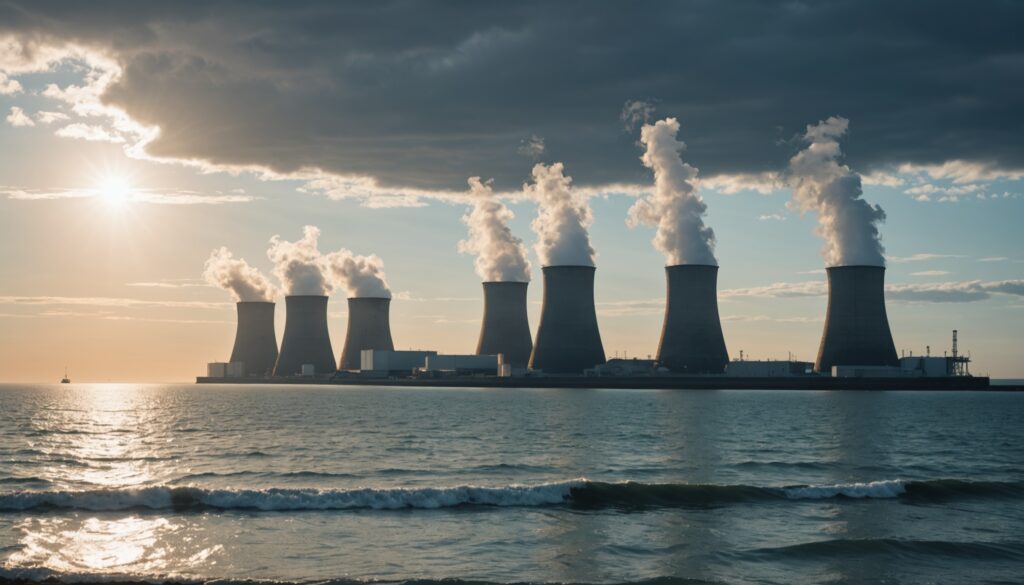
The weekend of August 8-10, 2026 once again highlighted a little-known vulnerability of France's nuclear fleet: the proliferation of jellyfish in the English Channel. At the Gravelines nuclear plant in northern France, three reactors had to be shut down and…
Gas Reserves in Europe: Why This Winter Looks Tense
Gas reserves in Europe are heading into the cold season in a far more fragile position than usual. According to data from Gas Infrastructure Europe (GIE), European Union storage facilities were only about 63% full at the end of August,…
Exceptional El Niño: Why Meteorologists Worldwide Are Worried About the Coming Winter
World's major meteorological centers are unanimous: an exceptional El Niño episode is forming in the Pacific, and it could break every record observed since modern measurements began in 1950. According to the American agency NOAA and the World Meteorological Organization…
Record Heat in Spain: A Signal That Worries Climate Scientists
A new heat record has just been set in Spain. On Thursday, the Spanish weather agency Aemet recorded 45.7°C in El Granado, in western Andalusia — a figure that matches the previous record for the month of September, set in…
This article was written with the help of artificial intelligence. Editorial policy