



On July 27, 2026, N'Djamena officially announced its withdrawal from the Rome Statute, the founding treaty of the International Criminal Court (ICC). Chad thus becomes the fourth African country to walk away from the Hague-based court since 2025, following Burkina Faso, Mali, and Niger. Beyond the announcement itself, the entire mechanism of international criminal justice is now being called into question.
A lengthy procedure, an immediate political signal
Contrary to what the word “withdrawal” suggests, nothing changes right away. Under Article 127 of the Rome Statute, a state party's exit only takes effect one year after written notification is sent to the United Nations. Chad therefore remains, on paper, a member of the ICC until summer 2027, and proceedings already underway are not automatically canceled.
Chad's Ministry of Foreign Affairs justifies the decision by pointing to what it calls a “limited and uneven” track record for the Court, highlighting a disproportionate focus on the African continent: the first nine investigations opened by the ICC concerned African situations, and six of the seven people currently under Court warrants fall within that framework. This is the same argument previously made by Bamako, Ouagadougou, and Niamey during their own withdrawal, announced jointly in September 2025.
An exodus that weakens the international judicial framework
With four Sahel countries now outside the Rome Statute, an entire regional bloc is gradually slipping out of the Court's jurisdiction. When the ICC was created in 1998, the United Nations praised the emergence of a universal criminal justice system capable of trying genocide, crimes against humanity, and war crimes independently of national courts. Twenty-eight years later, that universality is being tested by withdrawals that, while not formally coordinated, form a clear regional trend.
Notably, Chad's decision was welcomed by the United States, which is itself not a party to the Rome Statute and has had tense relations with the Court since U.S. sanctions were imposed on some of its magistrates. This support shows just how much the ICC, meant to embody a neutral form of international law, has become a geopolitical flashpoint in its own right.
What remains of international criminal justice in Africa?
Despite its withdrawal, N'Djamena says it intends to “continue the fight against impunity” through its own national courts. This is a promise the ICC itself regularly frames as the principle of “complementarity”: the Court only steps in as a last resort, when national courts are unable or unwilling to prosecute. The question remains whether the judicial systems of departing countries have the resources and independence needed to investigate war crimes or crimes against humanity without international oversight.
For the other African states that remain members—a majority still support the Court, including Senegal and Nigeria—the growing number of withdrawals raises a fundamental question: should the ICC be reformed to geographically rebalance its investigations, or are we witnessing a lasting weakening of judicial multilateralism?
Frequently Asked Questions
Is Chad's withdrawal already in effect?
No. The Rome Statute provides for a one-year delay between notification of withdrawal and its taking effect. Chad therefore formally remains an ICC member until summer 2027.
What other countries have recently left the ICC?
Burkina Faso, Mali, and Niger jointly announced their withdrawal in September 2025, citing the same arguments of geographic bias as Chad.
Does the withdrawal cancel ongoing proceedings?
No, investigations and prosecutions already underway before the withdrawal takes effect are not automatically dropped, according to the Court's procedural rules.
To learn more, check out our International News section, as well as our articles on government decisions and law and justice.
Sources
- RFI — Le Tchad annonce se retirer du Statut de Rome
- Al Jazeera — Chad to join raft of withdrawals from the ICC
- AllAfrica — Le Tchad officialise son retrait de la CPI

Victorian Solar Storm: A Nearly Two-Century-Old Mystery Finally Solved
A train departing sixteen minutes late, a telegraph going haywire on its own, and a century and a half later, scientists reopening the case: this is the story, as quiet as it is fascinating, of a Victorian solar storm whose…
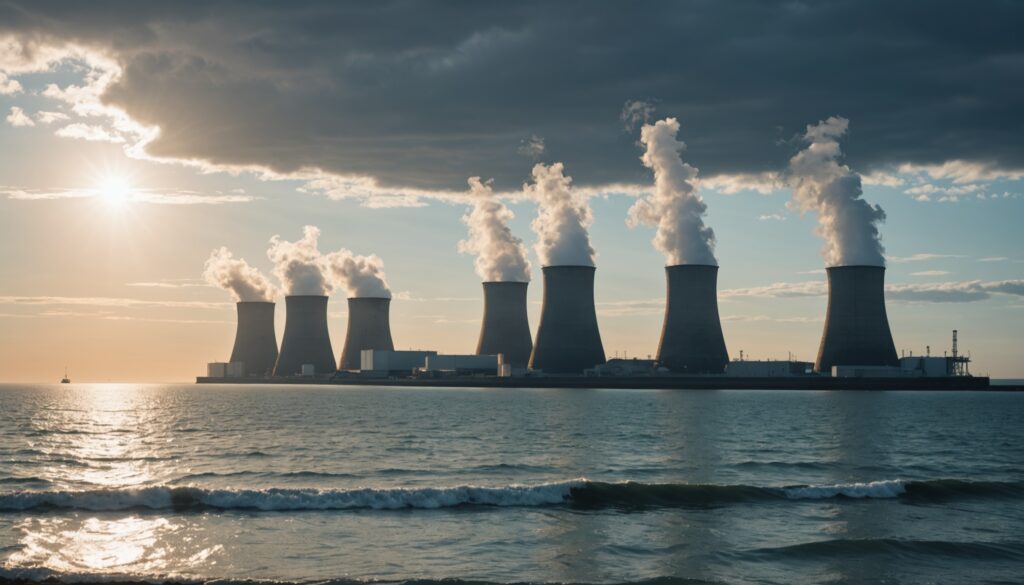
Jellyfish in the Channel: Why the Gravelines Nuclear Plant Had to Shut Down Its Reactors
The weekend of August 8-10, 2026 once again highlighted a little-known vulnerability of France's nuclear fleet: the proliferation of jellyfish in the English Channel. At the Gravelines nuclear plant in northern France, three reactors had to be shut down and…

Gas Reserves in Europe: Why This Winter Looks Tense
Gas reserves in Europe are heading into the cold season in a far more fragile position than usual. According to data from Gas Infrastructure Europe (GIE), European Union storage facilities were only about 63% full at the end of August,…

Why a $50 Million T-Rex Fossil Has Scientists Worried
A Tyrannosaurus rex skeleton has just shattered every record on the fossil market. Sold for $50.1 million at an auction in New York, this specimen nicknamed “Gus” is now the most expensive dinosaur bone ever sold at auction — and…

PISA: Gap Between Advantaged and Disadvantaged Students Widens in France
On September 8, the OECD released the results of its PISA 2025 survey, conducted among more than 760,000 15-year-old students in 91 countries and regions. In France, the findings go beyond a simple drop in the rankings: it is above…

Record Heat: July 2026 Confirmed Among the Hottest Months Ever Measured
Data from the European Copernicus service has just confirmed it: July 2026 ranks among the hottest months ever recorded worldwide since modern measurements began in 1850. The oceans, for their part, broke an all-time record for surface temperature. Beyond the…
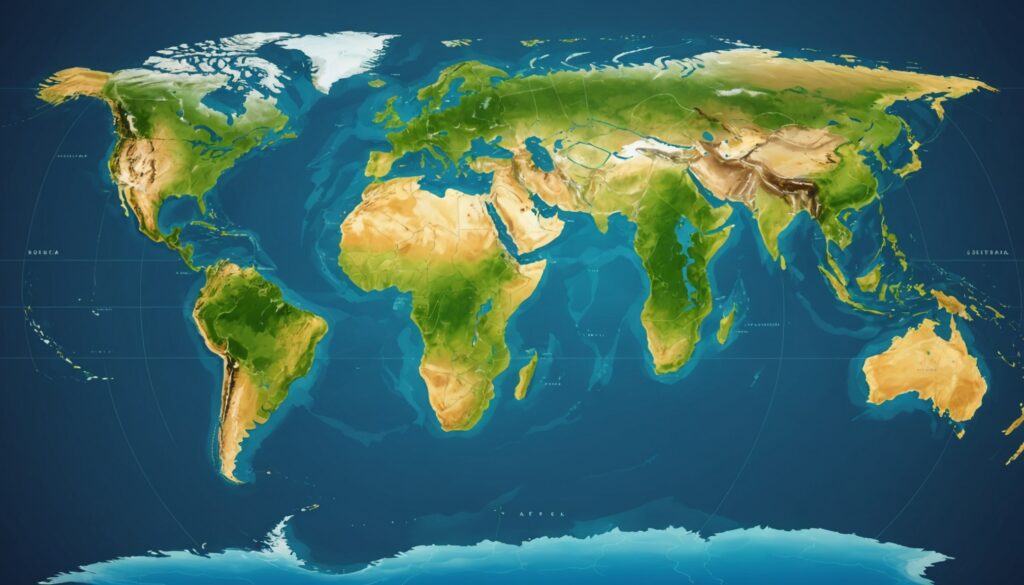
The UN Adopts a New World Map to Turn the Page on Mercator
On September 4, 2026, the United Nations General Assembly adopted an unprecedented resolution: encouraging governments, schools, and major technology companies to gradually phase out the famous world map in the Mercator projection, considered too distorting, in favor of a representation…

Total Solar Eclipse in Europe: A Rare Phenomenon Finally Returns
On August 12, 2026, the European sky put on a show the continent hadn't seen in nearly three decades: a total solar eclipse. Starting in a remote region of Siberia, the Moon's shadow swept across Greenland, Iceland, then northern Spain…
This article was written with the help of artificial intelligence. Editorial policy