

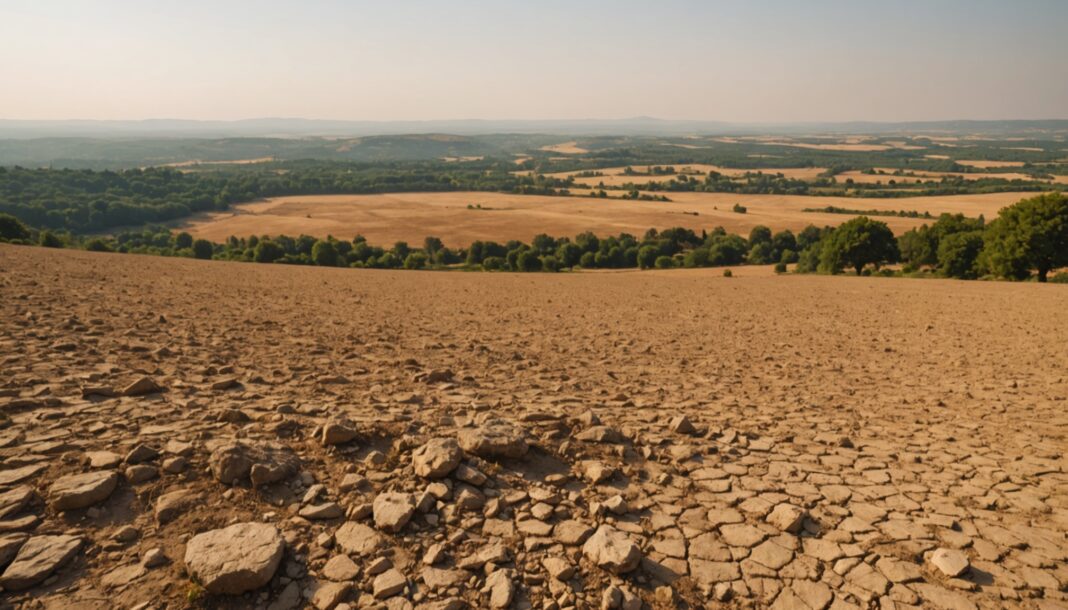

France has just equipped itself with an official thermometer for the climate crisis. By publishing the first annual report on the impacts of climate change in France, the government has put precise figures on a reality that many are already feeling: summers that stretch on longer, water taps that run dry, forests that burn. This document, set to become a recurring event, does more than just take stock. It lays the groundwork for a culture of adaptation that every resident, every municipality, and every business will need to embrace.
A first report that puts numbers to what people already feel
Presented in early July 2026 and coordinated with the Haut Conseil pour le climat (France's High Council on Climate), this report documents for the first time, year by year, the observable consequences of climate change across the country. The central message is unambiguous: in 2025, mainland France reached a warming level of +2.2°C compared to pre-industrial levels, making it the fourth-hottest year ever recorded in the country.
Behind this average lie very concrete events. For 2025, the report notes in particular:
- Two major heat waves affecting around 80% of the population;
- 78 départements (French administrative districts) placed under water-use restrictions;
- More than 30,500 hectares burned in wildfires;
- The cost of natural disaster events estimated at 5.2 billion euros.
The point of the exercise is not to dramatize, but to provide a stable baseline. By repeating this report every year, the government is giving itself the means to measure a trend rather than commenting, case by case, on each extreme event.
Why this report changes the game for local communities
A seemingly technical figure now shapes every planning decision: France is officially preparing for a climate of +4°C on average across mainland France. This reference trajectory, written into the Environmental Code (Code de l'environnement) in early 2026, serves as the compass for the national adaptation plan and its dozens of measures.
In practical terms, this means that building codes, forest management, the sizing of water networks, and urban planning must all be designed for a hotter climate than today's. A building designed in 2026 will still be standing in the 2080s: ignoring this would mean programming in its own discomfort, or even its obsolescence. The housing sector, heavily affected, will find these issues addressed in the real estate and construction section.
What this means day to day
Adaptation isn't just a matter for the government. It also plays out at the household level. Anticipating heat (shutters, greenery, insulation), rethinking watering habits and plant choices in the garden, or factoring the risk of heat waves into work schedules are becoming useful habits. Since heat wave episodes have documented consequences for the health of the most vulnerable, summer prevention is taking on growing importance.
It's also worth debunking a common misconception: adapting doesn't mean giving up on cutting emissions. The two approaches are complementary. The less we limit warming, the heavier and more costly the adaptation effort will be. The annual report is specifically meant to highlight this link, showing, with figures to back it up, what inaction costs.
Frequently Asked Questions
What is the annual report on climate change impacts?
It is an official document, coordinated with the Haut Conseil pour le climat, that records each year the observed consequences of climate change in France: heat, drought, wildfires, and associated costs. It aims to inform adaptation policy with verified data.
What does the +4°C adaptation target mean?
France has adopted a reference trajectory corresponding to warming of about +4°C on average across mainland France. This is not a desired outcome, but a cautious assumption used to size infrastructure and public policy.
Adaptation or emissions reduction: do we have to choose?
Neither one alone. Cutting emissions limits the scale of future warming, while adaptation protects against impacts that are already unavoidable. Both strategies are being pursued at the same time.
Sources
- Actu-Environnement — The government publishes the first annual report
- Citepa — 2025, the fourth-hottest year on record in France
- Ministry for Ecological Transition — First annual report
Summer 2026: France and Europe Shatter Sunshine Records
Nearly uninterrupted sunshine, electric meters spinning in the best possible way: summer 2026 will go down in the continent's climate and energy history books. According to official data from Météo-France (the French national meteorological service), five Western European countries recorded,…
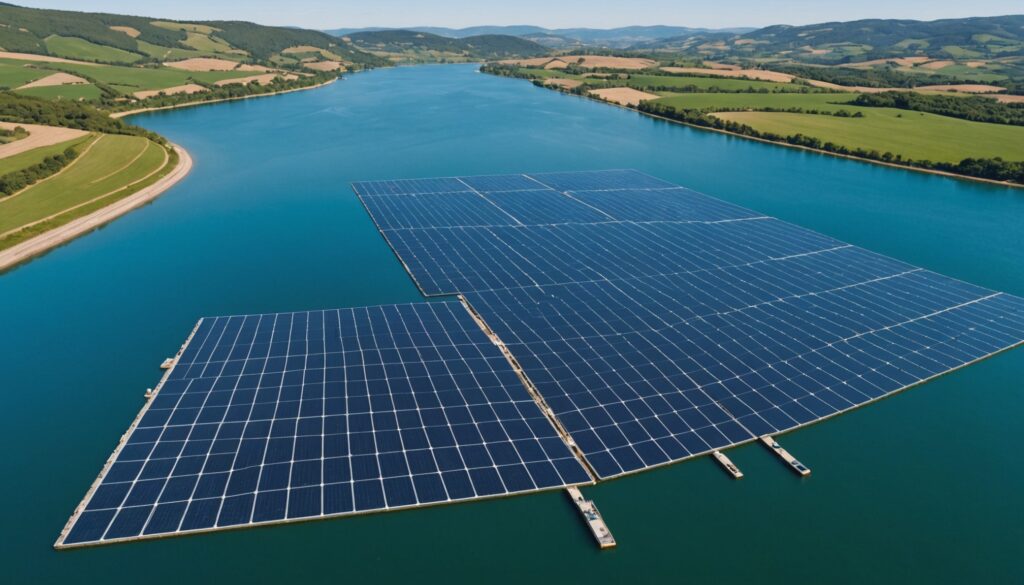
Floating Solar: France Accelerates on Its Lakes and Dams
On dam lakes, flooded former quarries, and hillside reservoirs, a new generation of photovoltaic power plants is taking root directly on the surface of the water. Floating solar is gradually establishing itself as one of the most discreet solutions in…
Marine Heat Waves: Why the Oceans Have Never Been This Hot
Sauna conditions beneath the waves: marine heat waves have never raged as fiercely as they did in the summer of 2026, and the world's ocean has just written an unflattering chapter in its thermal history. July will go down as…
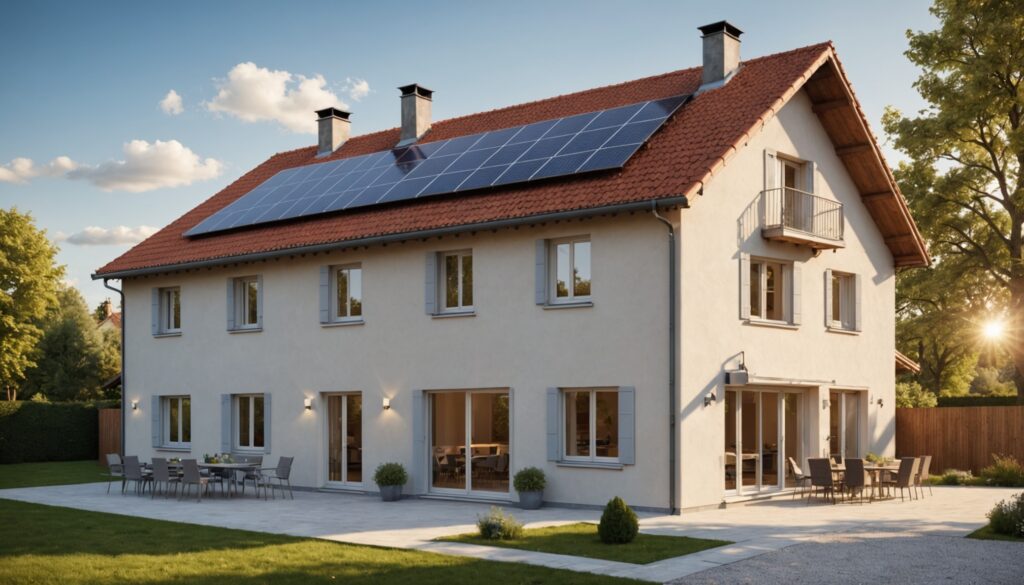
Energy Renovation: CEE Grants Narrowed to Focus on the Leakiest Homes
Starting September 1, 2026, energy renovation grants are entering a new phase. Two decrees signed on August 17, 2026, and published in the Journal officiel (France's official gazette) on August 23, narrow the French Energy Savings Certificates (CEE) scheme around…
Plastic Bottle Deposit Scheme: Government Drops Mandatory National System
So much for the dream of a mandatory plastic bottle deposit scheme across France. The government has just given up on requiring municipalities to adopt a national deposit system for plastic bottles, opting instead for an opt-in approach limited to…
European Sustainable Development Week: The Spotlight on Responsible Eating
Starting September 18 and running through October 8, France is taking part in European Sustainable Development Week (SEDD), an annual highlight held across Europe. Local governments, businesses, schools, nonprofits, and ordinary citizens are invited to organize or join concrete actions…
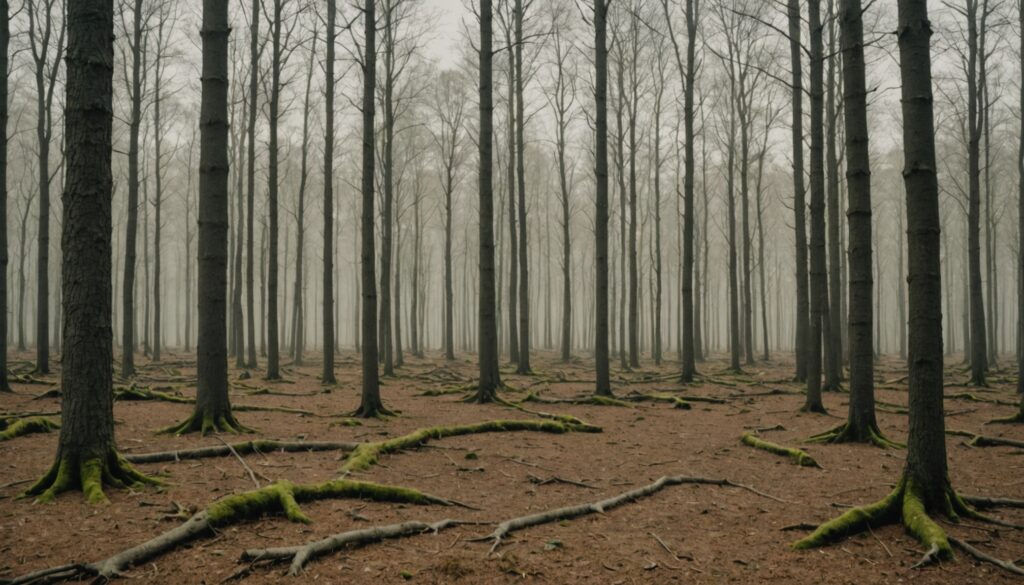
French Forests: Coverage Is Growing, but Their Health Is Declining Sharply
They gain ground every year, yet they have never been so fragile. The latest national forest inventory, published in early July 2026 by the IGN (France's national mapping and forestry information institute), paints a contrasting picture: French forests continue to…
PFAS in Tap Water: The Polluter-Pays Fee Finally Takes Effect
After more than a year of delay, the polluter-pays principle finally applies to PFAS discharges into water. Since September 1, 2026, industrial companies that dump these “forever chemicals” must pay a fee — a landmark measure in our environment and…
This article was written with the help of artificial intelligence. Editorial policy