







A turning point may be emerging in the fight against one of the worst Ebola outbreaks ever recorded. On October 23, 2026, in Bunia, in the Ituri province in the northeast of the Democratic Republic of the Congo (DRC), the first volunteers received an injection as part of the clinical trial named Tumaini — “hope” in Swahili. Announced by the World Health Organization (WHO), this protocol aims to determine whether existing or experimental vaccines can protect against the Bundibugyo strain of the virus, responsible for the ongoing outbreak.
An Outbreak Like No Other
Declared last May, this 17th Ebola outbreak recorded in the DRC has become the deadliest in the country's history. It has surpassed 9,700 confirmed cases and more than 4,600 deaths, according to the latest figures reported by Congolese health authorities and relayed by the WHO. The particularly high fatality rate is partly explained by the absence, until now, of a vaccine specifically validated against the Bundibugyo strain.
Unlike the Zaire strain, responsible for the majority of previous outbreaks and already covered by an approved vaccine, the Bundibugyo strain had no protection proven effective on a large scale. In its scale, this outbreak recalls the 2014-2016 West African epidemic, which killed more than 11,000 people and led to the accelerated development of the Ervebo vaccine. It illustrates the difficulty of anticipating mutations and variants of the virus, which has several strains with different profiles. This is precisely what the Tumaini trial, a phase II/III protocol, aims to address.
Three Vaccine Candidates Under Study
The clinical trial relies on several complementary approaches:
- Ervebo, the vaccine already approved against the Zaire strain, tested here for possible cross-protection;
- a ChAdOx1 adenoviral vector candidate, developed by the University of Oxford, specifically designed against the Bundibugyo strain;
- a second candidate specific to this strain, currently in development at the American company Moderna.
The stated goal is to vaccinate up to 20,000 people over a period of nine to twelve months. More than 3,700 people had already received a dose in two provinces by the time of the trial's official launch. Some of the doses used come from a stock of 70,000 units released in August by the Vaccine Alliance (Gavi), at the request of the Congolese government.
Why This News Extends Beyond the DRC's Borders
Beyond the local health emergency, this clinical trial directly concerns the international scientific community. An uncontrolled outbreak in a region as densely populated as Ituri — a crossroads of trade between several countries in Central and East Africa — poses a risk of regional, or even wider, spread through population movements and cross-border exchanges.
For global public health, finally having a validated vaccine against the Bundibugyo strain would close a gap identified by epidemiologists for several years: that of an Ebola virus capable of circumventing the tools already developed against its cousin, the Zaire strain.
What's Next
The first partial results of the Tumaini trial, covering participants' tolerance and immune response, are expected in the coming months. Data on actual effectiveness against virus transmission will require longer follow-up as the vaccination campaign progresses on the ground. The WHO and Congolese authorities have indicated they intend to publish regular progress updates, in a context where every week of delay translates into new cases.
Frequently Asked Questions
What is the Tumaini clinical trial?
Tumaini is a phase II/III clinical trial launched on October 23, 2026, in Bunia, DRC. It aims to assess whether existing or in-development vaccines protect against the Bundibugyo strain of the Ebola virus, responsible for the country's ongoing outbreak.
Why wasn't there already a vaccine against this strain?
The only approved Ebola vaccine, Ervebo, targets the Zaire strain, the one most frequently encountered in previous outbreaks. The rarer Bundibugyo strain had never been the subject of a large-scale trial until the launch of Tumaini.
How many people are involved in this trial?
The trial is set to cover up to 20,000 volunteers over nine to twelve months. More than 3,700 people had already received a dose in two provinces by the time of the official launch, as part of the broader ongoing vaccination campaign.
Sources

A Saudi-Funded Dragon Ball Theme Park Near Paris
A Dragon Ball theme park is set to rise about thirty kilometers from Paris. The announcement was officially made on August 24, 2026 by the Élysée, during the visit to France of Saudi Crown Prince Mohammed bin Salman. The project,…

Autonomous Delivery Robots: France Paves the Way on Its Roads
A text published in the Journal officiel (France's official gazette) on August 7, 2026 changes the game for last-mile delivery in France. The Ministry of Transport now authorizes the homologation of autonomous delivery robots capable of traveling on the roadway,…
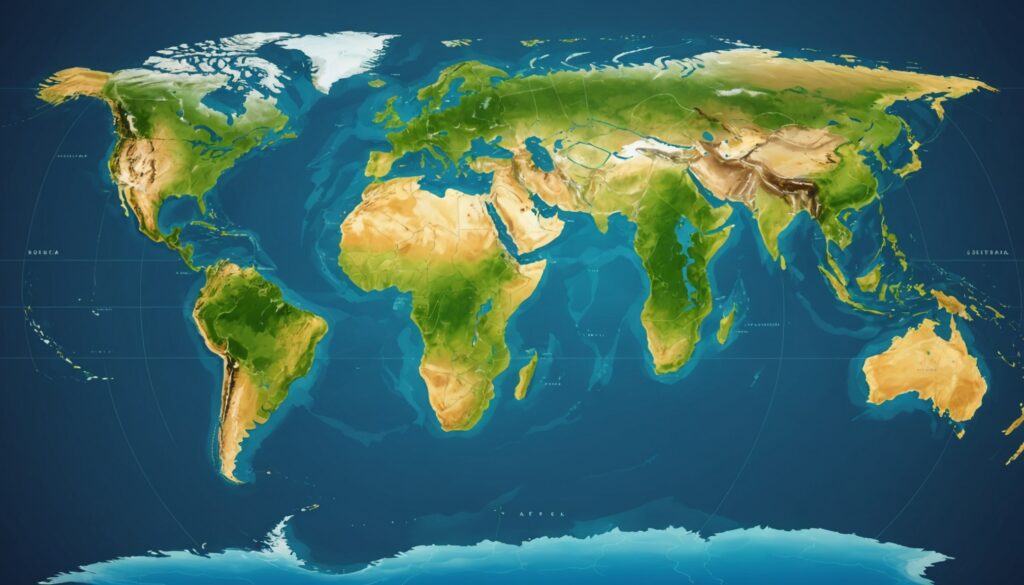
The UN Adopts a New World Map to Turn the Page on Mercator
On September 4, 2026, the United Nations General Assembly adopted an unprecedented resolution: encouraging governments, schools, and major technology companies to gradually phase out the famous world map in the Mercator projection, considered too distorting, in favor of a representation…

Victorian Solar Storm: A Nearly Two-Century-Old Mystery Finally Solved
A train departing sixteen minutes late, a telegraph going haywire on its own, and a century and a half later, scientists reopening the case: this is the story, as quiet as it is fascinating, of a Victorian solar storm whose…

Record Heat: July 2026 Confirmed Among the Hottest Months Ever Measured
Data from the European Copernicus service has just confirmed it: July 2026 ranks among the hottest months ever recorded worldwide since modern measurements began in 1850. The oceans, for their part, broke an all-time record for surface temperature. Beyond the…

South Korean Container Ship Blazes New Arctic Trade Route
On Saturday, August 22, 2026, a container ship left the South Korean port of Busan bound for Europe. Nothing extraordinary at first glance, except that this ship will take neither the Suez Canal nor the Strait of Malacca: it will…

Panama Canal: Drought Forces Drastic Cut to Shipping Traffic
The Panama Canal will reduce its shipping traffic starting September 3, in the midst of a drought driven by the El Niño climate phenomenon. The canal authority (ACP) confirmed on Thursday that the number of ships allowed to transit each…

PISA: Gap Between Advantaged and Disadvantaged Students Widens in France
On September 8, the OECD released the results of its PISA 2025 survey, conducted among more than 760,000 15-year-old students in 91 countries and regions. In France, the findings go beyond a simple drop in the rankings: it is above…
This article was written with the help of artificial intelligence. Editorial policy