

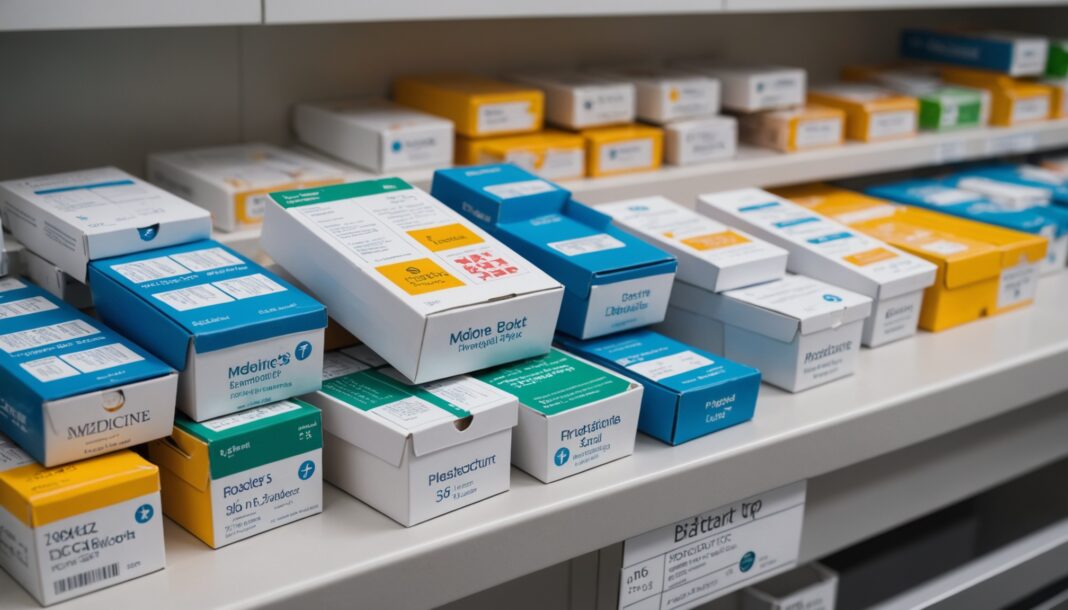

What if your box of Doliprane could sit in the medicine cabinet two more years without ending up in the trash? That's the whole point of the “Long Live Medications” plan launched by the ANSM, France's National Agency for Medicines Safety: 73 of the best-selling medications in France, including Dafalgan and Efferalgan, are candidates for an extended shelf life.
The Principle: Reassess, Don't Improvise
In practical terms, 14 pharmaceutical companies responded to the call for applications launched by the agency in late 2025, during COP30. Their mission: to submit their flagship products to a rigorous scientific reassessment, based on stability data, to check whether the molecule remains just as effective and safe well beyond the date printed on the box. The composition and packaging don't change: only the expiration date evolves, product by product, after validation.
Acetaminophen is on the front line: Efferalgan 500 mg could go from 36 to 60 months of shelf life, with Dafalgan following a similar trajectory. Other very common treatments are affected, notably those based on amoxicillin, levothyroxine, or lithium—chronic medications that millions of French people keep on hand.
Why Now?
Three reasons come together, and none of them is trivial:
- Fighting waste: expiration dates that are sometimes overly conservative send thousands of still perfectly effective boxes to be destroyed;
- Recurring supply shortages affecting certain common medications, which longer-usable stocks help cushion;
- A reduced environmental impact, since producing, transporting, and then destroying a medication carries an ecological cost that the ANSM wants to bring down.
On this last point, the approach echoes other conservation efforts covered in our section dedicated to recent advances in medical research, where scientific innovation also serves very concrete public health goals.
A Gradual Extension, Not a Blanket Green Light
There's no question of setting a new date in stone for all existing batches overnight. The ANSM has chosen a product-by-product rollout, with annual review points to issue new, modified marketing authorizations. For 47 of the 73 candidate products, the shelf life could climb to four years or more. The oversight is meant to be rigorous, even if that means slowing down or adjusting the timeline should the stability data fall short.
This development fits into a broader context of strain on health-related purchasing power in France: between the battle over doubling medical co-payment fees and the cuts to reimbursements on certain devices and medications, every box that doesn't end up in the trash represents a welcome saving at the household level.
Find more analysis in our Health and Medicine and Consumer – Shopping sections.
Frequently Asked Questions
Is an Expired Medication Dangerous?
Generally, no: beyond the date indicated, a medication mainly loses effectiveness gradually, without becoming toxic in the vast majority of cases. It's precisely this scientific finding that justifies the reassessment being carried out by the ANSM.
Which Medications Are Affected First?
Very common products like Dafalgan and Efferalgan, as well as treatments based on amoxicillin, levothyroxine, or lithium, are among the 73 candidates identified by the ANSM.
When Will These New Dates Appear on the Boxes?
The process is gradual and validated medication by medication: the new shelf lives will only appear once a modified marketing authorization has been issued for each product, with annual review points.
Sources

Refusing This Medication at the Pharmacy Counter Could Now Cost You
A simple gesture at the pharmacy counter can now change how much comes out of your pocket. Since September 1, the third-party payment program tied to generics (tiers payant, the system that lets patients skip paying upfront when they accept…
Health Reimbursements: Deductibles, Medications, and Mental Health Support—What's Changing
As of October 1, 2026, several measures that took effect are changing your health reimbursements in concrete ways. Medical deductibles have been raised, some medications are now less well covered for patients with a long-term chronic illness (ALD, the French…

Social Security Health Reimbursements in France Are Falling: What It Will Really Cost You
Four decrees published in the Official Journal (Journal officiel) on August 22, 2026 confirm a reduction in Assurance Maladie (France's national health insurance) reimbursements for routine dental care, a portion of medications, and several medical devices. The stated goal: to…

Medical Deductibles: Why France Is Giving Up on Doubling the Cap
The French government has just reversed course on one of the most contested aspects of its health policy. Announced this summer, the plan to double the cap on medical deductibles will ultimately not take effect in the immediate future. The…

Flu: The Epidemic Starts Early, Two Regions Already Affected
Seasonal flu is settling into France several weeks ahead of its usual schedule. According to the latest bulletins from Santé publique France (France's public health agency), flu indicators rose sharply during the week of November 9-15, across all age groups,…

Infant Bronchiolitis: A New Monoclonal Antibody Shakes Up Pharmacies
Every fall brings back the same habits: airing out rooms, avoiding crowded places with an infant, washing your hands before picking one up. This season, a more structural change joins the mix. The national bronchiolitis prevention campaign kicks off on…

Specialist Fee Overruns: How They Work and What Reforms Are Planned
Fee overruns charged by specialist doctors in France could become the norm rather than the exception. In a report presented in early September, the High Council for the Future of Health Insurance (HCAAM) warns that if nothing changes, 90% of…

France Santé Network: A Guaranteed Medical Appointment Within 48 Hours
Finding a doctor in under two days: that's the promise of the new France Santé network, created by France's social security financing law for 2026. This label, still little known to the general public, is meant to structure the local…
This article was written with the help of artificial intelligence. Editorial policy