





From August 17 to 28, 2026, Ulaanbaatar is hosting COP17 of the United Nations Convention to Combat Desertification (UNCCD). Far from the cliché of a summit reserved for the Sahel countries, this conference raises a question that directly concerns Europe and France: how can increasingly degraded farmland, worn down by heat and drought, be restored without jeopardizing global food security?
A summit about land, not just about desert
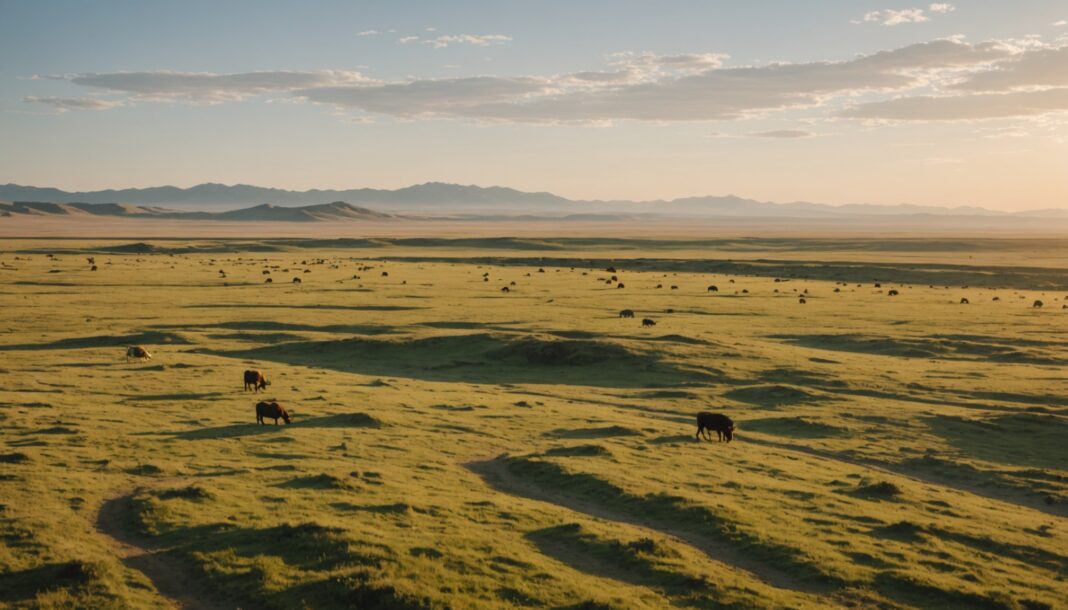
Held under the theme “Restore the Land, Restore Hope,” this 17th Conference of the Parties brings together delegations from the convention's 197 member countries, alongside scientists, NGOs, pastoralists, and farmers. The host country, Mongolia, is itself a stark illustration of the issue's urgency: nearly 77% of its territory is now considered degraded. The conference coincides with the International Year of Rangelands and Pastoralists, declared by the United Nations at Mongolia's initiative.
The program is built around four thematic days: the financing of soil restoration, water management, land and the people who depend on it, and finally food systems. This structure reflects a shift in perspective: desertification is no longer treated as an isolated problem, but as a factor weighing on the entire food chain.
Pastoralism, the blind spot of traditional discussions
One of the most concrete contributions of this edition comes from the work led by Cirad, the French agricultural research organization for development, which is calling for explicit recognition of the role of pastoralism in the sustainable management of ecosystems. Long seen as an archaic or marginal activity, extensive livestock herding is now presented by several delegations as a genuine land management tool: the controlled movement of herds can limit erosion and encourage vegetation regeneration, provided it is properly managed.
France is present in Ulaanbaatar through a pavilion bringing together several cooperation and research organizations, as well as the French Scientific Committee on Desertification. This delegation is championing an approach that combines field research with public policy, rather than simple one-off financial aid.
What this means in practice
- An updated international framework to direct soil restoration financing toward the most vulnerable areas;
- Greater recognition of pastoralism as an ecological management tool, with possible consequences for European agricultural policy;
- An acknowledged link between land degradation and food security, extending well beyond arid zones alone;
- Expected benefits for French agronomic research, through partnerships forged during the conference.
For businesses and investors, these discussions are not just a distant diplomatic matter: the still-nascent mechanisms for financing land restoration could eventually open new markets for agricultural technology and water management solutions. It's a sector worth watching closely, including for finance and investment, as well as for agri-food companies covered in our business and society section.
A conference without an immediate verdict
Unlike the climate COPs, the UNCCD does not set binding numerical targets comparable to those of the Paris Agreement. Its conclusions will take the form of political declarations and roadmaps, whose implementation will then depend on each individual state. Even so, those present in Ulaanbaatar are stressing the urgency of action: according to several speakers, countries of the Global South are demanding faster, more predictable financing, as drought episodes intensify even around the Mediterranean rim. To learn more about other environment-related topics, visit our ecology and climate section.
Frequently Asked Questions
What is the UNCCD?
The United Nations Convention to Combat Desertification is an international treaty adopted in 1994, bringing together 197 parties to fight land degradation, desertification, and the effects of drought.
Why is Mongolia hosting this COP17?
Mongolia is among the countries hardest hit by desertification, with nearly 77% of its territory degraded. It is also the country behind the International Year of Rangelands and Pastoralists, declared by the UN for 2026.
Is France affected by desertification?
While mainland France is not classified as a desert zone, some Mediterranean regions are experiencing gradual soil degradation linked to recurring drought, which explains French research's involvement in the convention's work.
Sources
Ministry for Ecological Transition —
Cirad —
Espèces-menacées.fr
Greenwashing: The EU's Anti-Greenwashing Directive France Hasn't Transposed Yet
Since September 27, 2026, European Union member states have had to apply strict rules against greenwashing: this is the date the directive (EU) 2024/825, nicknamed EmpCo, entered into application. The problem: France has still not transposed the text into its…
PFAS in Tap Water: The Polluter-Pays Fee Finally Takes Effect
After more than a year of delay, the polluter-pays principle finally applies to PFAS discharges into water. Since September 1, 2026, industrial companies that dump these “forever chemicals” must pay a fee — a landmark measure in our environment and…
Energy Renovation: CEE Grants Narrowed to Focus on the Leakiest Homes
Starting September 1, 2026, energy renovation grants are entering a new phase. Two decrees signed on August 17, 2026, and published in the Journal officiel (France's official gazette) on August 23, narrow the French Energy Savings Certificates (CEE) scheme around…
Fonds Chaleur Suspended: What the Decision Means for Local Governments and Households
The French government has just suspended the Fonds Chaleur, the Ademe (France's agency for ecological transition) program that has funded renewable heating and cooling networks since 2009: biomass, geothermal, solar thermal, and industrial waste heat recovery. Announced on November 3…

Public Procurement: Environmental Criteria Become Mandatory, the End of Price-Only Bids
Starting August 21, 2026, a page turns for companies that respond to public tenders in France. The Climate and Resilience Law of 2021 fully takes effect on its public procurement provisions: it will no longer be possible for a public…
Climate in France: What the First Annual Impact Report Reveals (and How to Prepare)
France has just equipped itself with an official thermometer for the climate crisis. By publishing the first annual report on the impacts of climate change in France, the government has put precise figures on a reality that many are already…

Electric Taxis: Up to €5,500 in Aid for Drivers
Driving all day to transport passengers is one of the most intensive uses a car can get. To speed up the electric transition of this heavily used fleet, the French government has introduced a financial aid program dedicated to taxis,…
Summer 2026: France and Europe Shatter Sunshine Records
Nearly uninterrupted sunshine, electric meters spinning in the best possible way: summer 2026 will go down in the continent's climate and energy history books. According to official data from Météo-France (the French national meteorological service), five Western European countries recorded,…
This article was written with the help of artificial intelligence. Editorial policy



: financing, pastoralism, and soil restoration take center stage, with strong French involvement. Here's what to know.)