


French supermarket shelves are dominated by ultra-processed products, and more and more voices are calling for them to finally be clearly flagged on packaging. In a survey published in early November 2026, the magazine 60 Millions de Consommateurs (a French consumer magazine) is calling for mandatory labeling of the degree of processing of foods, in addition to the Nutri-Score. A petition backed by Foodwatch, Yuka, and France Assos Santé (a French health advocacy association), launched in April 2026, has already gathered nearly 229,000 signatures.
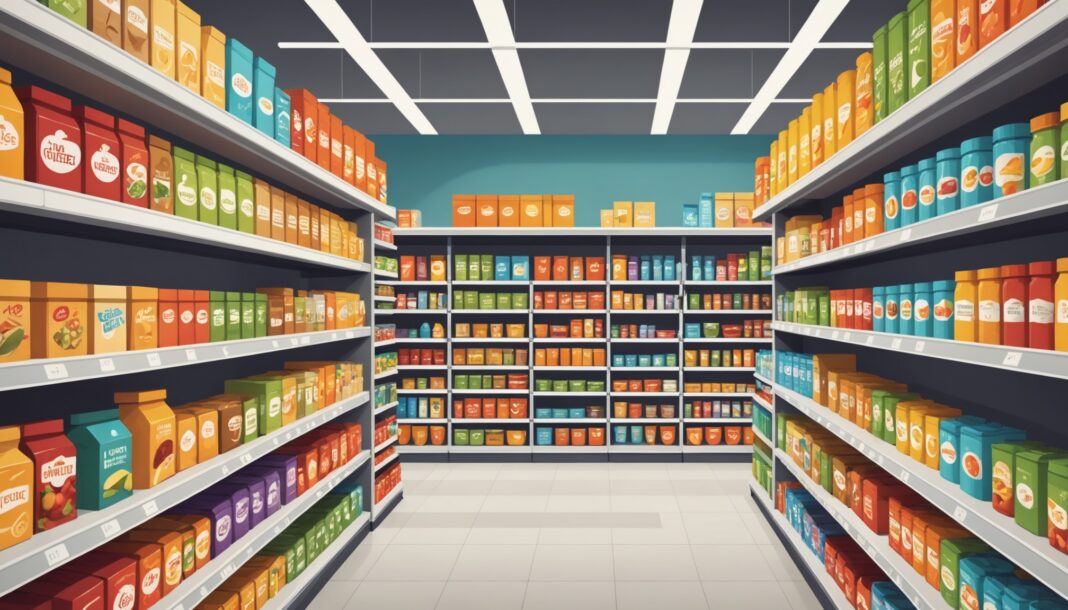
Shelves Largely Dominated by Ultra-Processed Products
The survey by 60 Millions de Consommateurs examined 16 categories of everyday products. Out of 210 common items analyzed, 9 out of 10 turned out to be ultra-processed, including alternatives marketed as healthier, such as certain organic or plant-based products. Separately, a Foodwatch survey dated April 2026 estimates that more than 60% of packaged products sold in French supermarkets fall into this category: cookies, sodas, sugary cereals, chips, nuggets, and ready-made meals.
This finding adds to another topic already covered on this site: French law already requires several mandatory disclosures on packaging, as our article on what the law really requires of brands regarding labeling points out. However, none of these disclosures currently provide information on a product's level of industrial processing.
Why the Nutri-Score Is No Longer Enough
According to Sophie Coisne, deputy editor-in-chief of 60 Millions de Consommateurs, the Nutri-Score “doesn't provide information about ultra-processing”: it assesses a product's overall nutritional quality, but not its degree of industrial processing. As a result, a plant-based steak loaded with additives can display a good Nutri-Score while still being heavily ultra-processed. The magazine is therefore proposing the creation of a complementary black logo, placed on the front of packaging, to clearly flag ultra-processed products.
The survey also points to a marketing practice dubbed “additive washing”: some brands highlight the absence of a particular additive on their packaging while staying silent about the presence of other additives in the same recipe. This type of practice echoes debates already covered regarding label regulations, particularly for honey, jams, and fruit juices, whose labeling rules have also recently changed.
A Petition Gaining Momentum
Launched on April 29, 2026 by Foodwatch, Yuka, and France Assos Santé, the petition calls on public authorities in France — the Prime Minister, the Ministry of Health, and the Ministry of Agriculture — for better regulation of ultra-processed products: tighter control of advertising and, above all, mandatory labeling on the front of packages. It has gathered nearly 229,000 signatures to date, a number that keeps growing week after week.
The advocacy groups point in particular to scientific research linking high consumption of ultra-processed products to an increased risk of obesity, cardiovascular disease, and type 2 diabetes. However, this research remains based on statistical associations and does not establish that any single food is, by itself, responsible for a given condition.
What This Means for Consumers
- A product with more than five ingredients, including flavorings, emulsifiers, or modified starches, is likely to be ultra-processed.
- The Nutri-Score remains useful for comparing nutritional quality, but says nothing about the level of processing.
- No official logo for ultra-processing currently exists in France: the request remains at the petition and advocacy stage.
- Contaminants and residues present in food are tracked separately, as detailed in our article on Anses's (France's food safety agency) reference study on food contaminants.
The issue goes beyond supermarket shelves: it also affects institutional catering, where the share of sustainable, minimally processed products promised in school cafeterias remains, according to advocacy groups, far from being achieved.
Frequently Asked Questions
What Is an Ultra-Processed Food?
It refers to a product that has undergone several stages of industrial processing and generally contains ingredients not found in a typical home kitchen: added flavorings, emulsifiers, colorings, or modified starches. The reference scientific classification, NOVA, places these products in its most heavily processed category.
Will the Nutri-Score Disappear?
No, no removal has been announced. Advocacy groups are calling for a complementary logo, not a replacement of the Nutri-Score, to specifically inform consumers about a product's degree of processing, something the current label does not provide.
Is Mandatory Labeling Already in Effect?
No. At this stage, it remains a request put forward by a citizen petition and by the 60 Millions de Consommateurs survey. No legal requirement to disclose the degree of processing currently exists in France or at the European level.
Sources
- Foodwatch.org — Press release on the petition against ultra-processed foods
- Orange Actu — Ultra-processed food products dominant but hard to identify
- ICI — 60 Millions de Consommateurs calls for mandatory disclosure of processing level
Early Grape Harvests: Why the Heat Wave Is Upending French Winemakers' Calendar
In France's vineyards, the summer of 2026 will go down as a season of records. Driven by a historic heat wave and significant drought, early grape harvests are multiplying across the country: some winemakers began picking as early as the…

France's Largest Bouillon Restaurant Sets Sail on Île Seguin
Forget sparsely filled dining rooms and dizzying bills: in Boulogne-Billancourt, a culinary ocean liner is about to drop anchor. Bouillon sur Seine opens its doors on September 15 on Île Seguin, with the openly stated ambition of becoming France's largest…
School Cafeterias 2026: The Promise of 50% Sustainable Food Still Unmet
Since 2018, France's EGalim law has promised children more responsible school cafeterias: half of the food served should be “sustainable and high-quality,” with a fifth of that coming from organic farming. The 2026 figures for school cafeterias, just published by…
Food Contaminants: What France's New Anses Reference Study Reveals
Acrylamide, lead, mercury, cadmium, aluminum: the French Agency for Food, Environmental and Occupational Health & Safety (Anses) has just released the first results of its third total diet study (EAT3), a landmark effort that measures what French people actually absorb…
Tomato Harvest Takes a Hit: Intermarché Bets on Misshapen Produce
The heat wave and drought that marked the summer of 2026 are leaving their mark on produce aisles in France. The tomato harvest has dropped by about 30% and lettuce has become scarcer, forcing retailers to rethink their supply habits.…
Cost of Eating Healthy: What the UN's 2026 Report Reveals
Eating well has never cost more. The cost of a healthy diet has jumped 25% in five years, according to the 2026 report from United Nations agencies on food security, released on July 21. Behind this figure lies a reality…
Vegan Flavor Awards: PETA France's 2026 Rankings Unveil New Winners
This week once again, PETA France revealed new faces of its 2026 Vegan Flavor Awards, with a bakery-pastry shop in Aix-en-Provence and a plant-based aperitif specialist in the Pas-de-Calais freshly honored. It's a good opportunity to take stock of this…
Early Grape Harvest: A Historic Crop Shakes Up French Vineyards
Two weeks before the official opening of the harvest season, the first pruning shears were already clicking away in the Languedoc region, in France. This year's early grape harvest is breaking every known record in France: never has a harvest…
This article was written with the help of artificial intelligence. Editorial policy