


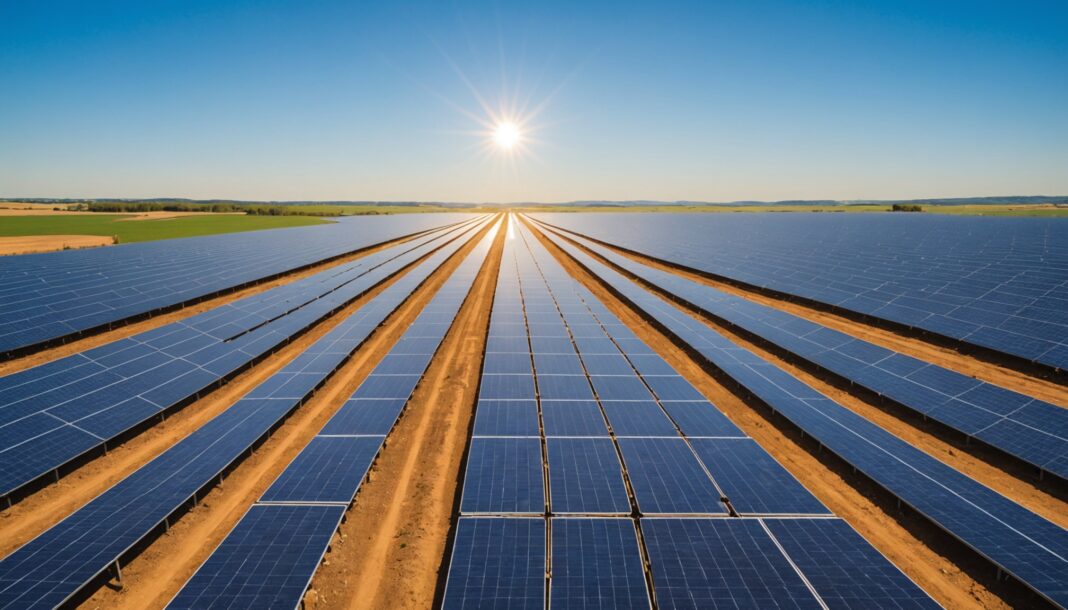

Nearly uninterrupted sunshine, electric meters spinning in the best possible way: summer 2026 will go down in the continent's climate and energy history books. According to official data from Météo-France (the French national meteorological service), five Western European countries recorded, one after another, sunshine records and photovoltaic production records, a sequence that raises as many questions as it offers reassurance about solar power's growing place in the energy mix.
July 2026, the Hottest Month Ever Recorded in France
The climate report published by Météo-France leaves no room for doubt: with an average temperature of 24.9°C, July 2026 becomes the hottest July ever recorded since records began in 1900, surpassing August 2003 (24.8°C) and July 2006 (24.4°C). The temperature anomaly reached +3.8°C compared to the 1991-2020 average, with high temperatures climbing up to +5.2°C above seasonal averages across much of the country.
The country went through its second major heat wave of the year, from July 4 to July 19, sixteen consecutive days ranking among the longest episodes ever observed. On July 12, 37 départements (French administrative districts) were placed under a red heat wave alert, and nights offered no relief: Pyrénées-Orientales broke the national record for minimum nighttime temperature, at 30.6°C.
Exceptional Sunshine: the Second-Best July Since 2003
A direct result of this high-pressure stability: the sunshine surplus reached 35% on average nationwide in July, making it the second-sunniest July ever measured, just behind July 2022 (+40%). Some weather stations even broke their all-time record for any month, such as Dinard, which logged up to 350 hours of sunshine. The precipitation deficit, close to 70% across the country, also makes July 2026 the third-driest July in recorded history, behind 2022 and 2020.
Solar Power Production Soars Across Western Europe
This radiant weather directly boosted the continent's photovoltaic production. According to the specialized outlet pv magazine France, several countries broke their solar production records during the first weeks of July and early August: France hit a historic peak of 199 GWh on July 6, Spain topped that two days later with 277 GWh, while Italy set a new record on July 10 with 167 GWh produced in a single day. That same day, Germany posted its second-best result ever with 494 GWh, and Portugal broke its own record with 34 GWh produced on July 7.
This momentum confirms an underlying trend that began back in May, marked by a persistent heat dome that had already produced particularly clear skies over a large part of central and western Europe. For grid operators, these repeated peaks raise questions about infrastructure adaptation, but above all they confirm the European solar fleet's ability to absorb electricity demand pushed upward by air conditioning use.
A Double-Edged Signal for the Energy Transition
While these records are good news for professionals in the solar technology sector, they also serve as a reminder that the growing number of heat waves is putting increased pressure on water resources and on household usage tracked as part of household consumption. The drought episodes observed this summer are particularly weakening the cooling systems of certain power plants and agricultural irrigation, two sectors directly affected by water availability.
- July 2026: hottest month ever recorded in France (24.9°C average)
- National sunshine surplus of 35%, second-best July since 1900
- Solar production records broken in France, Spain, Italy, and Portugal
- Precipitation deficit close to 70%, third-driest July ever recorded
Beyond the numbers, this sequence illustrates a phenomenon now well documented by climatologists: increasingly frequent episodes of extreme heat are mechanically accompanied by a rise in renewable solar energy production, while also worsening tensions over water and soil. A balance that grid operators and public authorities will need to learn to better anticipate in the years ahead.
Frequently Asked Questions
Why is July 2026 considered a record in France?
Because the national average temperature, 24.9°C according to Météo-France, exceeds every July and even every summer month measured since records began in 1900, including the scorching August of 2003.
Which countries broke solar production records this summer?
France, Spain, Italy, Germany, and Portugal all recorded unprecedented daily photovoltaic production peaks between early July and early August 2026, according to pv magazine France.
Does this sunshine record also have downsides?
Yes: it comes with a precipitation deficit close to 70% and some of the driest soils ever observed in France, which is heightening tensions over water, agriculture, and the cooling of certain energy infrastructure.
Sources
- Météo-France — July 2026 Climate Report
- pv magazine France — Solar Production Records in Europe
- France Info — Six Key Figures from July 2026

COP17 on Desertification: The Global Summit Set to Change the Game for Farmland
From August 17 to 28, 2026, Ulaanbaatar is hosting COP17 of the United Nations Convention to Combat Desertification (UNCCD). Far from the cliché of a summit reserved for the Sahel countries, this conference raises a question that directly concerns Europe…
French Forests: Coverage Is Growing, but Their Health Is Declining Sharply
They gain ground every year, yet they have never been so fragile. The latest national forest inventory, published in early July 2026 by the IGN (France's national mapping and forestry information institute), paints a contrasting picture: French forests continue to…

Drought in France: What a Water Restriction Order Changes
Watering your garden in the middle of the day, filling your pool, washing your car with a pressure washer: these everyday actions have become banned across nearly all of French territory this summer. After a spring that broke heat records…
Floating Solar: France Accelerates on Its Lakes and Dams
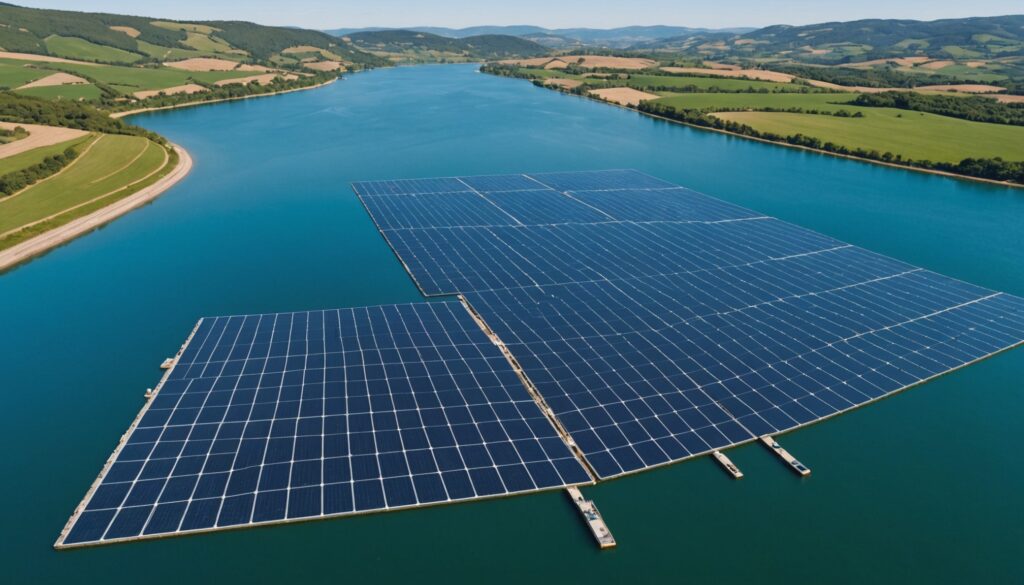
On dam lakes, flooded former quarries, and hillside reservoirs, a new generation of photovoltaic power plants is taking root directly on the surface of the water. Floating solar is gradually establishing itself as one of the most discreet solutions in…
Greenwashing: The EU's Anti-Greenwashing Directive France Hasn't Transposed Yet
Since September 27, 2026, European Union member states have had to apply strict rules against greenwashing: this is the date the directive (EU) 2024/825, nicknamed EmpCo, entered into application. The problem: France has still not transposed the text into its…
Climate in France: What the First Annual Impact Report Reveals (and How to Prepare)
France has just equipped itself with an official thermometer for the climate crisis. By publishing the first annual report on the impacts of climate change in France, the government has put precise figures on a reality that many are already…
Energy Renovation: CEE Grants Narrowed to Focus on the Leakiest Homes
Starting September 1, 2026, energy renovation grants are entering a new phase. Two decrees signed on August 17, 2026, and published in the Journal officiel (France's official gazette) on August 23, narrow the French Energy Savings Certificates (CEE) scheme around…
PFAS in Tap Water: The Polluter-Pays Fee Finally Takes Effect
After more than a year of delay, the polluter-pays principle finally applies to PFAS discharges into water. Since September 1, 2026, industrial companies that dump these “forever chemicals” must pay a fee — a landmark measure in our environment and…
This article was written with the help of artificial intelligence. Editorial policy