
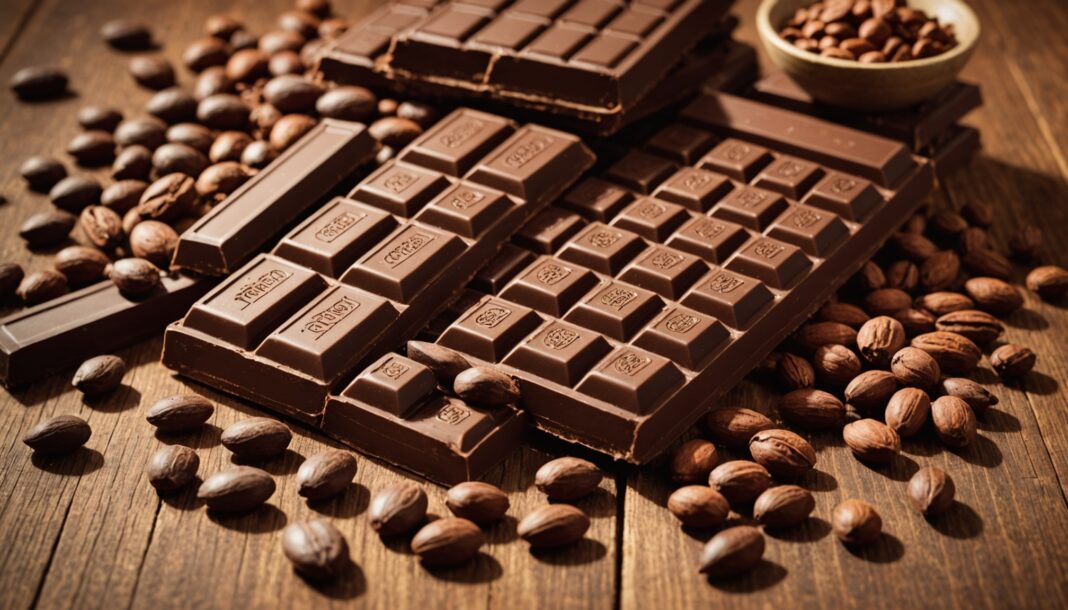

Global cocoa prices have cooled off, but the price of chocolate on store shelves refuses to come back down. In France, chocolate bars are up an average of 15.3% over the past year, with some climbing as high as €4.69 at the priciest retailers. This gap has less to do with current speculation than with the slow-moving mechanics of chocolate manufacturing.
Cocoa Has Calmed Down, but Store Shelves Haven't Caught Up
After two years of soaring prices, the cocoa market began to ease in early October, driven by the resumption of the harvest in West Africa. But this decline isn't immediately reflected in supermarket prices. A manufacturer quoted by France Télévisions sums up the mechanics: “What we're buying now will show up in stores between December 2026 and March 2027.” The chocolate sold today, meanwhile, was made with beans purchased about eighteen months ago, at the height of record prices.
Why Chocolate Bars Remain Expensive
Raw cocoa accounts for only about 15% of a chocolate bar's final retail price: packaging, transportation, distribution margins, and manufacturing costs all weigh just as heavily on the final bill. As a result, some manufacturers have raised their prices by 20% over two years, and over four years, the cumulative increase reaches 36%, far outpacing overall inflation in France over the same period. The consumer association Que Choisir has also found that past declines in cocoa prices have historically never really benefited shoppers in stores. The same kind of lag shows up in other food sectors: the latest UN report on the cost of a healthy diet also points to persistent gaps between the price of raw materials and what consumers pay at the end of the chain.
The Headache Facing Ivorian and Ghanaian Producers
Further up the supply chain, the situation remains tense. For the 2026-2027 season, Ivory Coast is holding its guaranteed farm-gate price at around 1,200 CFA francs per kilogram, while Ghana has raised its own to about $3.65 per kilogram, nearly double. This gap is fueling an informal flow of Ivorian beans into Ghana, and highlights the fragility of an industry where producers' incomes depend entirely on decisions made by Western manufacturers, far removed from the plantations.
Key Takeaways
- Up 15.3% year-over-year for chocolate bars in France
- Up 36% cumulatively over four years, far above overall inflation
- Cocoa purchased today won't reach store shelves until between December 2026 and March 2027
- Raw cocoa accounts for only about 15% of a bar's final price
On the manufacturing side, some companies are banking on nostalgia rather than price to win over consumers regardless, as seen with the return of the Wonka brand to French store shelves. Other initiatives are working to make food more sustainable without waiting for prices to stabilize, as shown by the recent European Sustainable Development Week focused on responsible eating.
Frequently Asked Questions
Why does the price of chocolate keep rising even as cocoa prices fall?
Because the chocolate on store shelves was made with beans bought months earlier, when prices were still high. The current drop in cocoa prices won't filter through until late 2026 at the earliest.
What share of a chocolate bar's price comes from cocoa?
Only about 15%: the rest covers manufacturing, packaging, transportation, and distribution margins.
Are cocoa producers benefiting from higher prices?
Unevenly: Ghana has raised the price it pays growers far more than Ivory Coast has, creating a pay gap between the world's two largest cocoa-producing countries.
Sources
France Info / France 2 — Cocoa: why chocolate prices are soaring
Que Choisir — the drop in cocoa prices isn't benefiting consumers
Koaci — Ghana raises cocoa purchase price for the 2026-2027 season
Listeria in Ready-to-Eat Foods: EU Regulations Tighten
A new European text is changing the rules for the safety of ready-to-eat foods. Starting July 1, 2026, Regulation (EU) 2024/2895 replaces the previous framework governing the bacterium Listeria monocytogenes, with stricter rules for manufacturers and distributors. Tartares, pastries, ice…
French Cuisine 2026: Michelin Records, LaListe, and the Bistro's Comeback
French cuisine is having a particularly rich year in 2026. Between an unprecedented global LaListe ranking, a Michelin selection that is breaking records for affordable restaurants, and trends reshaping our dining habits, French cuisine in 2026 confirms a deep-seated shift:…
Early Grape Harvests: Why the Heat Wave Is Upending French Winemakers' Calendar
In France's vineyards, the summer of 2026 will go down as a season of records. Driven by a historic heat wave and significant drought, early grape harvests are multiplying across the country: some winemakers began picking as early as the…
Vegan Flavor Awards: PETA France's 2026 Rankings Unveil New Winners
This week once again, PETA France revealed new faces of its 2026 Vegan Flavor Awards, with a bakery-pastry shop in Aix-en-Provence and a plant-based aperitif specialist in the Pas-de-Calais freshly honored. It's a good opportunity to take stock of this…
Food Labeling: What the Law Really Requires of Brands
A simple yogurt or ready-made meal label actually conceals a real stack of legal texts. Behind every line printed on a package, food labeling follows precise European rules, overseen in France by a dedicated administration. Between origin requirements, allergen management,…
School Cafeterias 2026: The Promise of 50% Sustainable Food Still Unmet
Since 2018, France's EGalim law has promised children more responsible school cafeterias: half of the food served should be “sustainable and high-quality,” with a fifth of that coming from organic farming. The 2026 figures for school cafeterias, just published by…

Wonka Lands on French Shelves: Ferrero Bets on Sweet Nostalgia
After months of rumors, Wonka is officially making its big comeback on French shelves. The Ferrero group, which already owns Nutella, Kinder, and Delacre, has just unveiled a candy range entirely inspired by the world of Charlie and the Chocolate…
Unsold Food: What the New EU Regulation Changes for the Food Industry
Since July 19, 2026, companies that manufacture, process, distribute, or import food products in Europe can no longer destroy their unsold goods without following precise rules. Regulation (EU) 2026/296, adopted on February 9, 2026, now strictly governs a practice that…
This article was written with the help of artificial intelligence. Editorial policy