



Watering your garden in the middle of the day, filling your pool, washing your car with a pressure washer: these everyday actions have become banned across nearly all of French territory this summer. After a spring that broke heat records and an early heat wave as soon as June, drought set in earlier and harder than in 2022, a year that had until now been considered the benchmark.
According to data from the official VigiEau service, more than 90 departments had issued a water restriction order by mid-August, ranging from the basic vigilance level up to crisis. As of August 12, 72 departments were already in a crisis situation and 17 others in heightened alert, with restrictions affecting even agricultural irrigation. Nearly 70% of the country is therefore affected, in one way or another, by a restriction measure.
Four alert levels, very different rules
The French system distinguishes four levels: vigilance, alert, heightened alert, and crisis. Each level adds new bans: limited watering hours under vigilance, a ban on filling private pools under alert, restricted agricultural water withdrawal under heightened alert, and an almost total ban on any non-priority use under crisis. The map is updated daily on the French government's website based on prefectural orders, department by department, sometimes even zone by zone within the same department.
Real penalties
Failing to comply with a restriction order is not a mere recommendation: it is a 5th-class criminal offense (contravention). The fine can reach €1,500 for an individual, rising to €3,000 for a repeat offense, and up to €7,500 for a legal entity, under Article R. 216-9 of the French Environmental Code. Checks are carried out by water police, notably the French Office for Biodiversity (l'Office français de la biodiversité), and increase during the summer period.
A few habits can help you avoid an unpleasant surprise:
- Check your municipality's alert level on the official map before any watering or pool filling.
- Favor watering early in the morning or late in the evening, even under simple vigilance, to limit evaporation.
- Install a rainwater collector, whose use generally remains permitted even during a crisis period.
- Watch for updates: an order can change level overnight depending on local rainfall.
This level of restriction also raises questions about the broader adaptation of daily life to heat: discover our ideas for rethinking your garden and outdoor space in light of new climate constraints, or our overview of current ecological issues. Professionals concerned will also find useful resources in our business and society section.
Frequently Asked Questions
How many French departments are affected by water restrictions in August 2026?
More than 90 departments have issued a restriction order, including 72 in a crisis situation and 17 in heightened alert as of August 12, 2026, according to VigiEau.
What is the risk of not complying with a drought order?
It is a 5th-class criminal offense: fines of up to €1,500 for an individual (€3,000 for a repeat offense) and up to €7,500 for a legal entity.
How do I know if my municipality is affected by a restriction?
The official VigiEau map, updated daily based on prefectural orders, shows the exact alert level municipality by municipality.
Sources
VigiEau (French government) —
Tout Sur Mes Finances —
Réussir

COP17 on Desertification: The Global Summit Set to Change the Game for Farmland
From August 17 to 28, 2026, Ulaanbaatar is hosting COP17 of the United Nations Convention to Combat Desertification (UNCCD). Far from the cliché of a summit reserved for the Sahel countries, this conference raises a question that directly concerns Europe…

Marine Heat Waves: Why the Oceans Have Never Been This Hot
Sauna conditions beneath the waves: marine heat waves have never raged as fiercely as they did in the summer of 2026, and the world's ocean has just written an unflattering chapter in its thermal history. July will go down as…
PFAS in Tap Water: The Polluter-Pays Fee Finally Takes Effect
After more than a year of delay, the polluter-pays principle finally applies to PFAS discharges into water. Since September 1, 2026, industrial companies that dump these “forever chemicals” must pay a fee — a landmark measure in our environment and…

Electric Taxis: Up to €5,500 in Aid for Drivers
Driving all day to transport passengers is one of the most intensive uses a car can get. To speed up the electric transition of this heavily used fleet, the French government has introduced a financial aid program dedicated to taxis,…
Fonds Chaleur Suspended: What the Decision Means for Local Governments and Households
The French government has just suspended the Fonds Chaleur, the Ademe (France's agency for ecological transition) program that has funded renewable heating and cooling networks since 2009: biomass, geothermal, solar thermal, and industrial waste heat recovery. Announced on November 3…
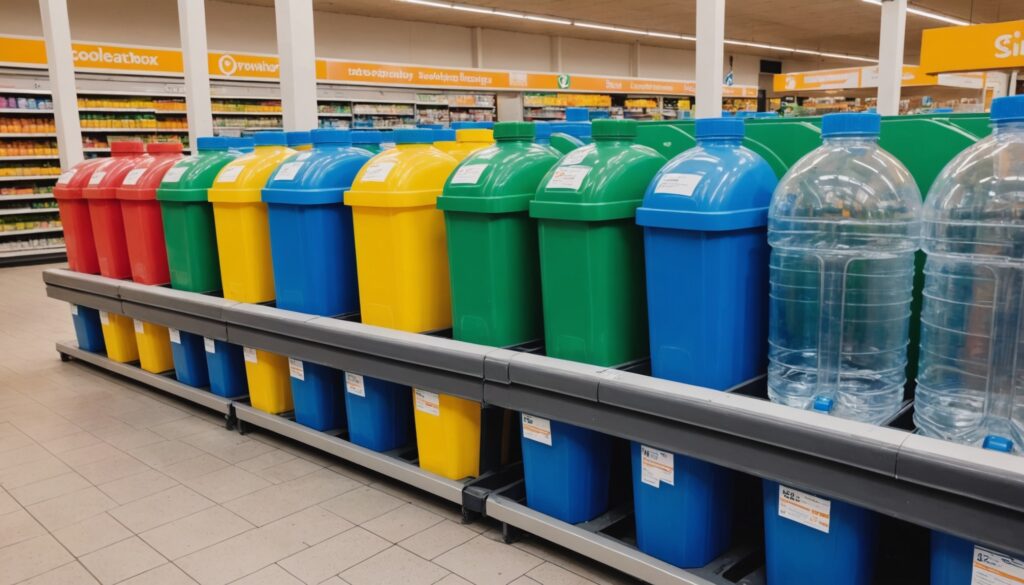
Plastic Bottle Deposit Scheme: Government Drops Mandatory National System
So much for the dream of a mandatory plastic bottle deposit scheme across France. The government has just given up on requiring municipalities to adopt a national deposit system for plastic bottles, opting instead for an opt-in approach limited to…

Greenwashing: The EU's Anti-Greenwashing Directive France Hasn't Transposed Yet
Since September 27, 2026, European Union member states have had to apply strict rules against greenwashing: this is the date the directive (EU) 2024/825, nicknamed EmpCo, entered into application. The problem: France has still not transposed the text into its…

Public Procurement: Environmental Criteria Become Mandatory, the End of Price-Only Bids
Starting August 21, 2026, a page turns for companies that respond to public tenders in France. The Climate and Resilience Law of 2021 fully takes effect on its public procurement provisions: it will no longer be possible for a public…
This article was written with the help of artificial intelligence. Editorial policy