

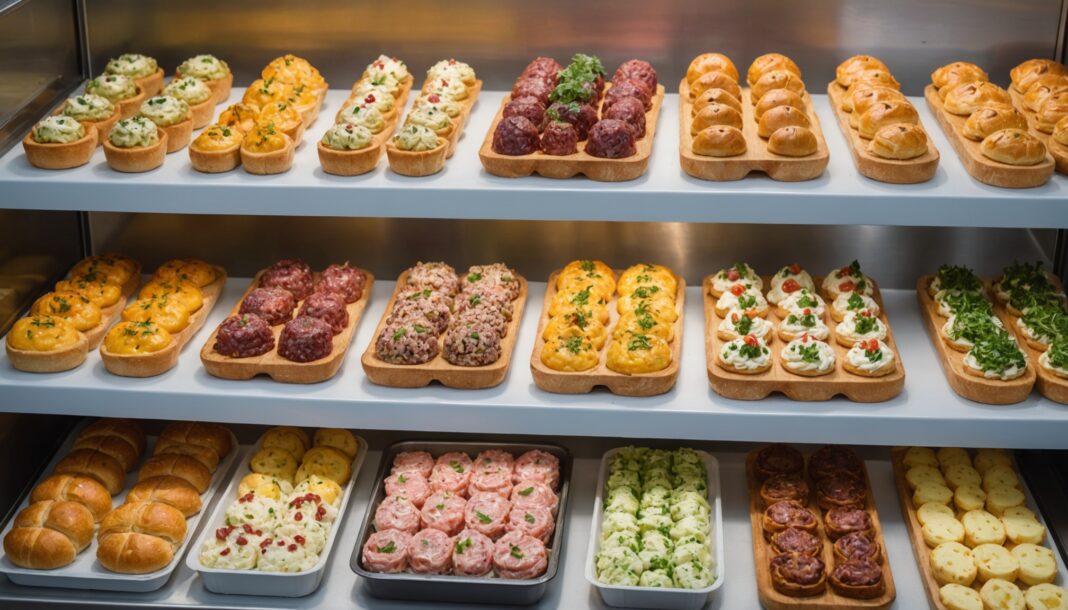

A new European text is changing the rules for the safety of ready-to-eat foods. Starting July 1, 2026, Regulation (EU) 2024/2895 replaces the previous framework governing the bacterium Listeria monocytogenes, with stricter rules for manufacturers and distributors. Tartares, pastries, ice cream, and party sandwiches: these products, which undergo no cooking before consumption, are directly affected.
What the new regulation changes
Until now, the requirement applied only to the moment the product left the factory: the bacterium had to be absent in 25 grams at that point. Regulation (EU) 2024/2895, published on November 20, 2024, extends this obligation to cover the entire shelf life of the product, up to its use-by date.
- Manufacturers must now demonstrate that Listeria levels will not exceed 100 colony-forming units per gram (CFU/g) throughout the product's entire shelf life.
- If they cannot establish this with certainty, the stricter standard applies again: total absence in 25 g, including at the use-by date.
- The text replaces Regulation (EC) No. 2073/2005, which has been in force for more than twenty years.
Why the rules are tightening
The revision responds to a rise in listeriosis cases observed in Europe in recent years, a rare but potentially serious infection in elderly people, pregnant women, or people with weakened immune systems. Health authorities want to narrow the margins of uncertainty around products that do not go through cooking before being eaten, unlike a reheated dish.
The issue is part of a series of texts reshaping how food products are controlled in France. The question of food labeling had already shifted the lines, as had the latest reference study from ANSES (the French food safety agency) on food contaminants, which had already pointed to the need for tighter oversight of certain microbiological risks on the plate.
Who is affected, and at what cost
All food business operators in France who manufacture or place ready-to-eat foods on the market will have to comply starting July 1, 2026. This applies to large manufacturers as well as to artisans and certain supermarket departments that process food on-site. The result: stronger control plans, aging tests on products to validate their microbiological stability, and potentially the withdrawal of items that cannot guarantee risk control up to the use-by date.
For small producers, compliance comes with a real cost: stability studies, recipe or packaging adjustments, and stronger quality controls. For consumers, the change largely remains invisible on store shelves, but it fits into a broader trend: while the cost of eating healthy already weighs on household budgets, the food safety of everyday products continues to be strengthened in parallel, without necessarily translating into a price increase that is directly noticeable at checkout.
Frequently Asked Questions
When does the new Listeria regulation take effect?
Regulation (EU) 2024/2895 applies starting July 1, 2026, in all European Union countries, including France.
Which food products are affected?
Ready-to-eat foods that require no prior cooking: tartares, ice cream, pastries, party sandwiches, and other similar preparations, provided they can support the growth of Listeria monocytogenes.
What is the allowed Listeria threshold in these products?
The reference threshold is set at a maximum of 100 CFU/g throughout the shelf life. If the operator cannot guarantee this limit, the bacterium must be completely absent in 25 g, including at the end of the product's shelf life.
Sources
Ultra-Processed Foods: Toward Mandatory Labeling on Packaging
French supermarket shelves are dominated by ultra-processed products, and more and more voices are calling for them to finally be clearly flagged on packaging. In a survey published in early November 2026, the magazine 60 Millions de Consommateurs (a French…
Food Contaminants: What France's New Anses Reference Study Reveals
Acrylamide, lead, mercury, cadmium, aluminum: the French Agency for Food, Environmental and Occupational Health & Safety (Anses) has just released the first results of its third total diet study (EAT3), a landmark effort that measures what French people actually absorb…
Chocolate: Why Prices Remain High Even as Cocoa Costs Fall
Global cocoa prices have cooled off, but the price of chocolate on store shelves refuses to come back down. In France, chocolate bars are up an average of 15.3% over the past year, with some climbing as high as €4.69…

Wonka Lands on French Shelves: Ferrero Bets on Sweet Nostalgia
After months of rumors, Wonka is officially making its big comeback on French shelves. The Ferrero group, which already owns Nutella, Kinder, and Delacre, has just unveiled a candy range entirely inspired by the world of Charlie and the Chocolate…
Cost of Eating Healthy: What the UN's 2026 Report Reveals
Eating well has never cost more. The cost of a healthy diet has jumped 25% in five years, according to the 2026 report from United Nations agencies on food security, released on July 21. Behind this figure lies a reality…
Cap d'Ona: The Catalan Brewery Crowned Best Beer in the World
In the Pyrénées-Orientales region, an artisanal Catalan brewery has once again lifted France to the top of the world's brewing scene. Cap d'Ona, based in Céret, was named best beer in the world in the rye beer category at the…
Vegan Flavor Awards: PETA France's 2026 Rankings Unveil New Winners
This week once again, PETA France revealed new faces of its 2026 Vegan Flavor Awards, with a bakery-pastry shop in Aix-en-Provence and a plant-based aperitif specialist in the Pas-de-Calais freshly honored. It's a good opportunity to take stock of this…

French Cuisine 2026: Michelin Records, LaListe, and the Bistro's Comeback
French cuisine is having a particularly rich year in 2026. Between an unprecedented global LaListe ranking, a Michelin selection that is breaking records for affordable restaurants, and trends reshaping our dining habits, French cuisine in 2026 confirms a deep-seated shift:…
This article was written with the help of artificial intelligence. Editorial policy