
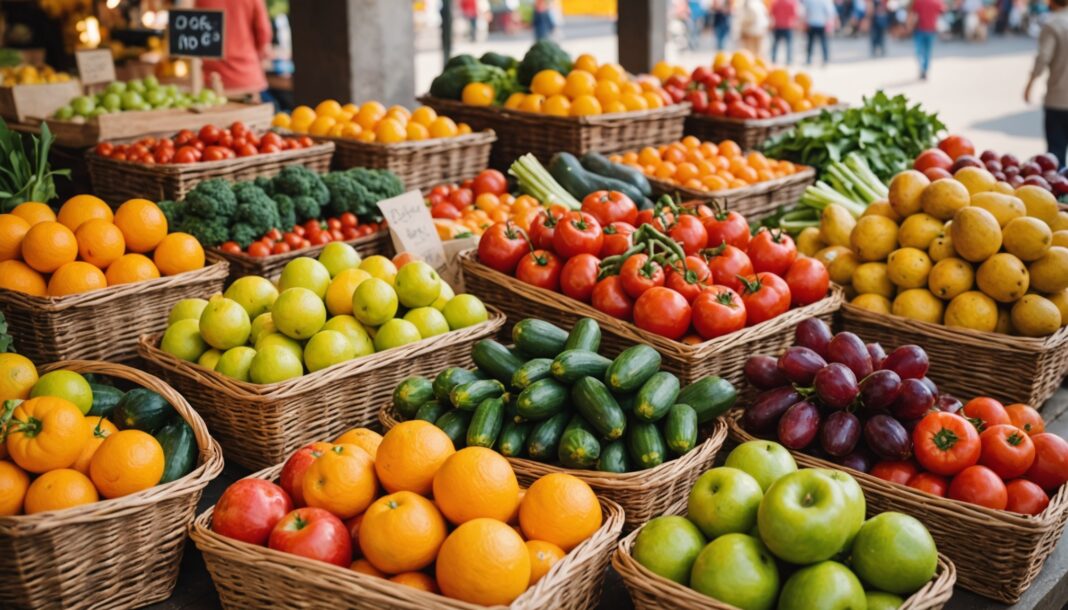

Eating well has never cost more. The cost of a healthy diet has jumped 25% in five years, according to the 2026 report from United Nations agencies on food security, released on July 21. Behind this figure lies a reality that affects both countries in the Global South and the wallets of French households alike: eating properly is becoming a budgetary trade-off. Here's a breakdown of the key data and the practical ways to avoid overspending.
A Rising Cost: Key Figures from the 2026 Report
The report The State of Food Security and Nutrition in the World (SOFI), co-produced by the FAO, WHO, WFP, IFAD, and UNICEF, devotes its 2026 edition to the high cost of a balanced diet. The key figures to remember:
- The global average cost of a healthy diet now stands at about $4.28 per person per day.
- This cost has risen by 25% since 2021, driven by the combined effects of inflation, climate shocks, and logistical strains.
- 2.69 billion people — nearly one in three people worldwide — still cannot afford it.
- Hunger, meanwhile, affects 645 million people, or 7.8% of the world's population.
Why Is Eating Healthy Getting More Expensive?
Contrary to popular belief, the price paid at checkout isn't mainly determined on the farm. According to the report, 70% to 75% of costs are generated after the farm gate: processing, transportation, storage, distribution, and middlemen's margins. In other words, the journey from producer to plate weighs more heavily than production itself.
The makeup of the basket matters too. Animal products and fresh fruit — precisely the foods recommended for a balanced diet — together account for nearly 46% of the bill. So it's the foods most beneficial to health that weigh most heavily on the budget, a paradox that widens inequalities in access to a healthy lifestyle.
What This Means in Practice for Your Plate
For a household, the consequence is direct: on a fixed budget, the temptation to fall back on ultra-processed foods — more caloric and often cheaper by the pound — is strong. This is an established fact backed by numerous consumer studies, not a forecast. The risk, in the medium term, is a silent decline in the nutritional quality of meals, especially for lower-income households.
This mechanism also has a climate and economic dimension: the volatility of agricultural prices, amplified by droughts, fuels a cycle in which environmental issues and purchasing power reinforce one another. That said, the diagnosis should be kept separate from the solutions: while the cost figures are measured facts, the remedies involve public policy trade-offs that remain under debate.
Ways to Eat Healthy Without Breaking the Bank
The report highlights one structural lever: bringing production closer to the consumer. According to its estimates — which remain modeling projections — expanding local production would cut the cost of a healthy diet by 34% worldwide, and by nearly 80% in Africa. On an individual level, a few habits can help offset the increase:
- Favor seasonal produce and short supply chains: an in-season fruit automatically costs less.
- Rebalance protein sources: legumes, eggs, and seasonal fish alternated with meat.
- Cut down on waste: planning meals and cooking leftovers lowers the real bill without sacrificing quality.
- Compare price per pound rather than per item, a habit in line with good budget management practices.
Frequently Asked Questions
What is the “cost of a healthy diet” measured by the UN?
It's the minimum price, per person per day, of a food basket that meets nutritional needs according to national dietary guidelines. In 2026, it stands at about $4.28 on average worldwide.
Why has this cost risen by 25%?
The increase since 2021 stems from widespread inflation, logistical disruptions, and climate-related shocks that have driven up the price of fruits, vegetables, and animal products in particular.
Is eating healthy really more expensive than eating processed food?
At checkout, yes, since fresh foods and protein account for nearly half the bill. But when factoring in the health costs avoided, a balanced diet remains a worthwhile investment in the long run.
Sources
- FAO — The State of Food Security and Nutrition in the World 2026 (SOFI)
- franceinfo — The cost of a healthy diet rose 25% in five years, according to the UN
- Le Devoir — The cost of a healthy diet has increased 25% in five years, according to the FAO
Regenerative Agriculture: How Nestlé and McDonald's France Are Transforming Their Supply Chains
Behind an expression that remains vague for many consumers, regenerative agriculture is quietly making its way into the strategies of the biggest names in the food industry operating in France. Neither a simple marketing argument nor a single label, this…
Listeria in Ready-to-Eat Foods: EU Regulations Tighten
A new European text is changing the rules for the safety of ready-to-eat foods. Starting July 1, 2026, Regulation (EU) 2024/2895 replaces the previous framework governing the bacterium Listeria monocytogenes, with stricter rules for manufacturers and distributors. Tartares, pastries, ice…

France's Largest Bouillon Restaurant Sets Sail on Île Seguin
Forget sparsely filled dining rooms and dizzying bills: in Boulogne-Billancourt, a culinary ocean liner is about to drop anchor. Bouillon sur Seine opens its doors on September 15 on Île Seguin, with the openly stated ambition of becoming France's largest…
Tomato Harvest Takes a Hit: Intermarché Bets on Misshapen Produce
The heat wave and drought that marked the summer of 2026 are leaving their mark on produce aisles in France. The tomato harvest has dropped by about 30% and lettuce has become scarcer, forcing retailers to rethink their supply habits.…
Chocolate: Why Prices Remain High Even as Cocoa Costs Fall
Global cocoa prices have cooled off, but the price of chocolate on store shelves refuses to come back down. In France, chocolate bars are up an average of 15.3% over the past year, with some climbing as high as €4.69…
Early Grape Harvests: Why the Heat Wave Is Upending French Winemakers' Calendar
In France's vineyards, the summer of 2026 will go down as a season of records. Driven by a historic heat wave and significant drought, early grape harvests are multiplying across the country: some winemakers began picking as early as the…

Wonka Lands on French Shelves: Ferrero Bets on Sweet Nostalgia
After months of rumors, Wonka is officially making its big comeback on French shelves. The Ferrero group, which already owns Nutella, Kinder, and Delacre, has just unveiled a candy range entirely inspired by the world of Charlie and the Chocolate…
Unsold Food: What the New EU Regulation Changes for the Food Industry
Since July 19, 2026, companies that manufacture, process, distribute, or import food products in Europe can no longer destroy their unsold goods without following precise rules. Regulation (EU) 2026/296, adopted on February 9, 2026, now strictly governs a practice that…
This article was written with the help of artificial intelligence. Editorial policy