


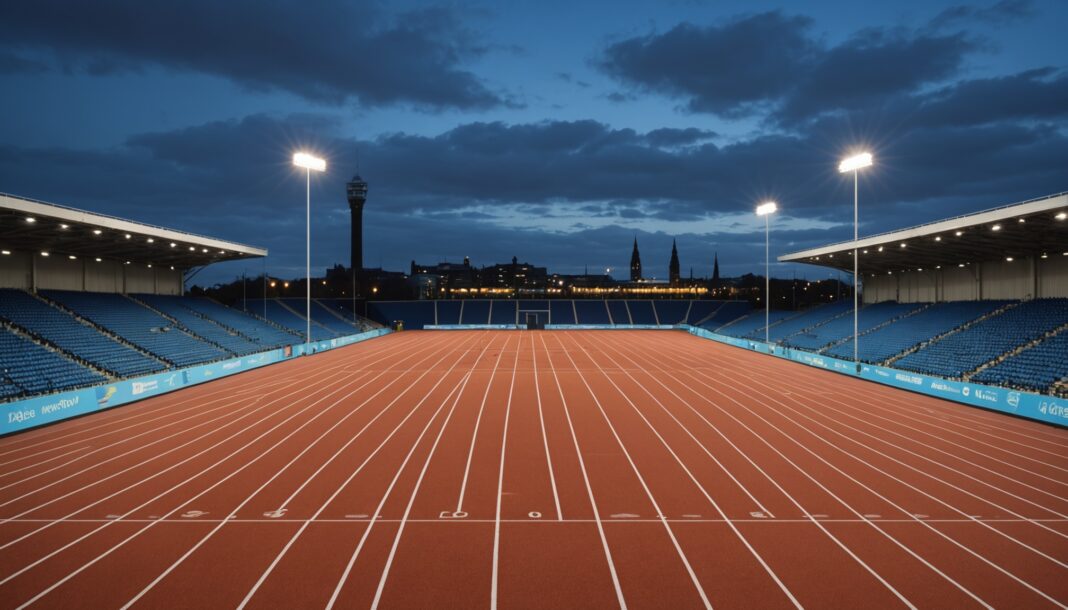

Starting July 23, 2026, Glasgow is hosting an edition unlike any other. The 2026 Commonwealth Games run through August 2 in the Scottish metropolis with an unprecedented ambition: to prove that a major global sporting event can survive while costing far less. Cut down to ten disciplines, concentrated in four venues, and funded without public money, these Games look less like an oversized celebration than a test bed for the future of mega sporting events.
A deliberately scaled-down format
The eleventh host city in the movement's history has made a radical choice: trading excess for restraint. Three historic sports—rugby sevens, field hockey, and cricket—have dropped off the program. Only ten disciplines remain, bringing together around 3,000 athletes, less than half the number seen in previous editions.
This slimming-down responds to a very concrete constraint. The event had originally been awarded to the Australian state of Victoria, which withdrew in July 2023, citing exploding costs. Without a replacement host, the 2026 edition nearly never happened, until an agreement backed by the Scottish government was announced in September 2024 to organize a “leaner but high-quality” version.
Four venues, no athletes' village
To pull off this bet, organizers relied on the legacy of the 2014 Games, already held in Glasgow. Competitions take place in four existing facilities, all within a seven-mile radius in the heart of the city:
- the Tollcross International Swimming Centre for swimming;
- the Scottish Event Campus, which houses several indoor disciplines;
- the Sir Chris Hoy Velodrome;
- Scotstoun Stadium for athletics.
Another break with tradition: there is no athletes' village. Delegations are housed in hotels, a decision that avoids a costly construction project that is often hard to make profitable once the celebration is over. This choice ties into the sustainability concerns now running through the organization of major gatherings, a topic we cover in our Ecology and Climate section.
A budget cut by more than two-thirds
The financial contrast is striking. Where the 2014 edition mobilized a budget of roughly £543 million, the 2026 edition targets an estimated total cost of £150 million. The Commonwealth Games Federation is contributing £100 million, with the rest coming from commercial revenue: ticketing, sponsorship, broadcast rights, and merchandise.
Above all, the organizers are claiming private financing, with no public guarantee from Glasgow, the Scottish government, or London. The British government, for its part, has refused to fully cover the event's financial risks. This economic model, closely watched by local authorities, is also of interest to our readers in the Finance section.
More nations and a bigger place for parasport
A paradox of this minimalist edition: it is setting a participation record. With the arrival of Gabon and Togo, 74 nations are represented, a historic high. The program also fully integrates para events (para athletics, para swimming, wheelchair basketball 3×3, para cycling, para lawn bowls, para powerlifting), blurring the line between able-bodied athletes and athletes with disabilities.
One question remains open: is this reduced format a one-off or the announcement of a new, sustainable model? The answer will carry real weight for international competitions as a whole, which face the same equation between ambition and cost control. Enough to fuel debate well beyond Scotland's borders, as shown in our coverage of local and national news.
Frequently Asked Questions
When do the 2026 Commonwealth Games take place?
The opening ceremony takes place on July 23, 2026, in Glasgow, and the closing is set for August 2, 2026. Events are held throughout this period across four venues in the city.
Why are there only ten sports this year?
After the Australian state of Victoria withdrew in 2023 for budgetary reasons, Glasgow took over the organization by scaling back the program to control costs. Rugby sevens, field hockey, and cricket were notably dropped.
Who is funding this edition of the Games?
The 2026 Games rely mainly on private funding, with a £100 million contribution from the Commonwealth Games Federation plus commercial revenue. No full public guarantee was granted by either the Scottish or British governments.
Sources
- The Conversation — The Commonwealth Games are here, with fewer sports, more nations and an uncertain future
- SportsPro — How Glasgow 2026 plans to save the Commonwealth Games
- Olympics.com — Glasgow 2026 Commonwealth Games schedule
Jellyfish in the Channel: Why the Gravelines Nuclear Plant Had to Shut Down Its Reactors
The weekend of August 8-10, 2026 once again highlighted a little-known vulnerability of France's nuclear fleet: the proliferation of jellyfish in the English Channel. At the Gravelines nuclear plant in northern France, three reactors had to be shut down and…
Exceptional El Niño: Why Meteorologists Worldwide Are Worried About the Coming Winter
World's major meteorological centers are unanimous: an exceptional El Niño episode is forming in the Pacific, and it could break every record observed since modern measurements began in 1950. According to the American agency NOAA and the World Meteorological Organization…
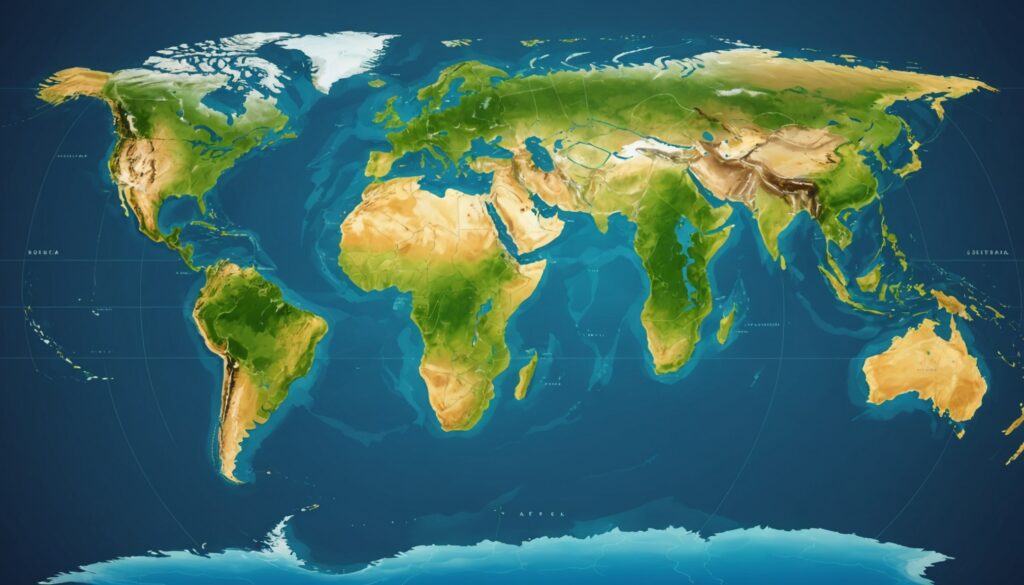
The UN Adopts a New World Map to Turn the Page on Mercator
On September 4, 2026, the United Nations General Assembly adopted an unprecedented resolution: encouraging governments, schools, and major technology companies to gradually phase out the famous world map in the Mercator projection, considered too distorting, in favor of a representation…
A Saudi-Funded Dragon Ball Theme Park Near Paris
A Dragon Ball theme park is set to rise about thirty kilometers from Paris. The announcement was officially made on August 24, 2026 by the Élysée, during the visit to France of Saudi Crown Prince Mohammed bin Salman. The project,…
Asteroids: China and Japan Pull Off a Double Space Feat Three Days Apart
The first week of July 2026 will be remembered as a rare moment in space exploration: three days apart, two Asian probes successfully rendezvoused with some of the smallest asteroids ever approached. The Chinese probe Tianwen-2 settled in near Kamoʻoalewa,…

Victorian Solar Storm: A Nearly Two-Century-Old Mystery Finally Solved
A train departing sixteen minutes late, a telegraph going haywire on its own, and a century and a half later, scientists reopening the case: this is the story, as quiet as it is fascinating, of a Victorian solar storm whose…
Record Heat in Spain: A Signal That Worries Climate Scientists
A new heat record has just been set in Spain. On Thursday, the Spanish weather agency Aemet recorded 45.7°C in El Granado, in western Andalusia — a figure that matches the previous record for the month of September, set in…
International Space Summit in Paris: What's at Stake on September 9-10, 2026
Rarely has a diplomatic conference looked so far toward the sky. On September 9 and 10, 2026, France is hosting an International Space Summit at the Grand Palais in Paris, expected to bring together nearly 120 foreign delegations. Announced at…
This article was written with the help of artificial intelligence. Editorial policy