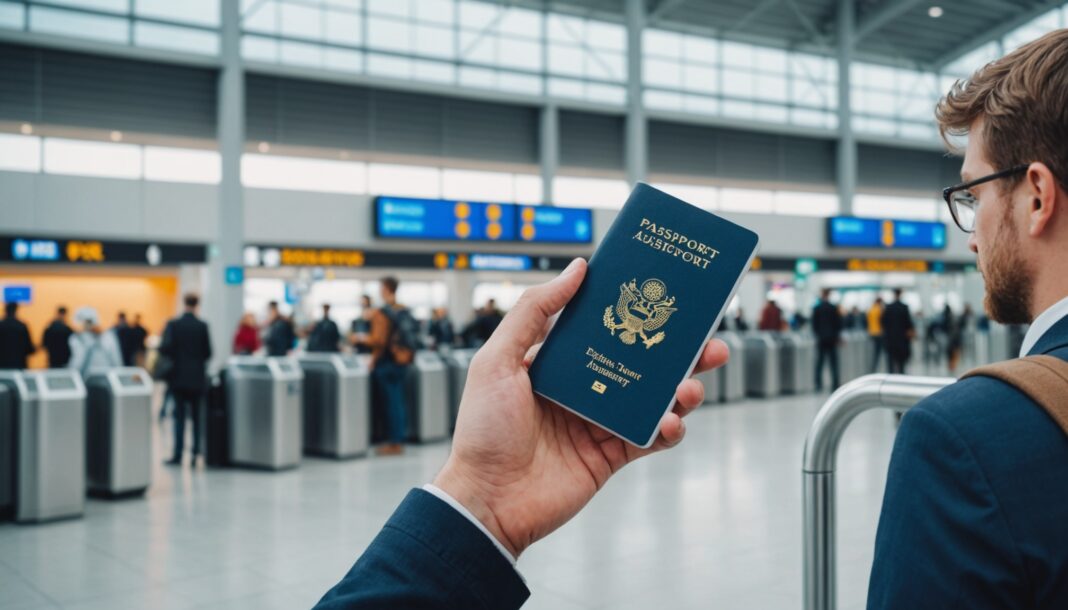

Traveling to the United States without an ESTA has been unthinkable for years now. Europe is preparing its own equivalent: ETIAS (European Travel Information and Authorisation System), whose launch date has not yet been set. For tens of millions of travelers from countries currently exempt from visas, a new formality will soon be added before boarding.
A System Modeled on the American ESTA
In practical terms, ETIAS does not replace a visa: it is an electronic travel authorization, linked directly to the passport, with no paper document to present. It applies to nationals of roughly sixty countries currently exempt from visas for stays of less than 90 days in the European area — Americans, Britons, Canadians, and Australians chief among them. Once obtained, it remains valid for three years, or until the passport expires, whichever comes first.
A Launch Tied to Another European Project
The activation of ETIAS depends on another European system, the EES (Entry/Exit System), the biometric database recording entries and exits from the Schengen area. That system is indeed up and running: rolled out gradually starting October 12, 2025, it has been fully operational since April 10, 2026 at all external borders, where it replaces the passport stamp for visitors from non-EU countries.
For ETIAS, the timeline remains open. The “last quarter of 2026” target, long put forward, was removed from the official European Union website in July 2026, and no launch date is officially set as of now. The European Commission has only committed to announcing it several months in advance, which in practice rules out a rollout before the end of 2026. Until then, no applications are being accepted: any website already offering to let you “apply for your ETIAS” is not official. Once the system launches, a transition period of about six months is planned: ETIAS will simply be recommended at first, before becoming fully mandatory.
The Price That's Sparking Debate: From 7 to 20 Euros
This is the least-discussed angle in the mainstream press, even though it directly affects travelers' wallets: on July 17, 2025, the European Commission officially announced that the fee originally planned would triple. Set at 7 euros in the original regulatory text, it will rise to 20 euros as soon as the system enters service, an increase justified by covering the system's operating costs and inflation since its adoption. Travelers under 18 and over 70 will remain exempt from this fee.
- Application entirely online, in principle taking just a few minutes
- Valid for three years or until the passport expires
- Applies to 30 European countries, including the entire Schengen area
- Fee exemption for travelers under 18 and over 70
What This Means for Travelers
During the transition period, not yet having an ETIAS should not block entry at European borders, but authorities will strongly recommend completing the process ahead of time to avoid any unpleasant surprises once the requirement becomes fully effective. For professionals in the travel and tourism sector, this new administrative formality adds to an already long list of regulatory changes at European borders in recent years. On a legal level, the measure fits into the broader framework of European law on the free movement of people, which already governs the EES and upcoming biometric border checks.
Frequently Asked Questions
Who will need to apply for an ETIAS authorization?
Nationals of roughly sixty countries currently exempt from visas for stays of less than 90 days in the European area, including citizens of the United States, the United Kingdom, Canada, and Australia.
How much will ETIAS cost?
The fee was set at 20 euros by the European Commission in July 2025, up from the 7 euros originally planned. Travelers under 18 and over 70 will be exempt.
When will ETIAS become mandatory?
No date has been officially set as of now: the “last quarter of 2026” target was removed from the official European Union website in July 2026, and the Commission will announce the launch date several months in advance. Once the system is in service, a transition period of about six months is planned, during which it will be recommended without being mandatory.
Sources
- European Commission – Directorate-General for Migration and Home Affairs
- AXA Partners – Travel Insurance
- CNBC
- European Union – Travel to Europe, official EES and ETIAS website

Visit Paris – A guide to exploring the city of love
Paris is one of the world's most famous cities, often referred to as the ‘City of Love'. It's known for its beauty, culture, art, and romance. Paris has been the inspiration for many writers, artists, filmmakers, and musicians throughout history.…
This article was written with the help of artificial intelligence. Editorial policy