



A simple yogurt or ready-made meal label actually conceals a real stack of legal texts. Behind every line printed on a package, food labeling follows precise European rules, overseen in France by a dedicated administration. Between origin requirements, allergen management, and financial penalties, here is what the regulation really requires of brands — and what it does not yet require them to do.
A Common European Foundation Since 2014
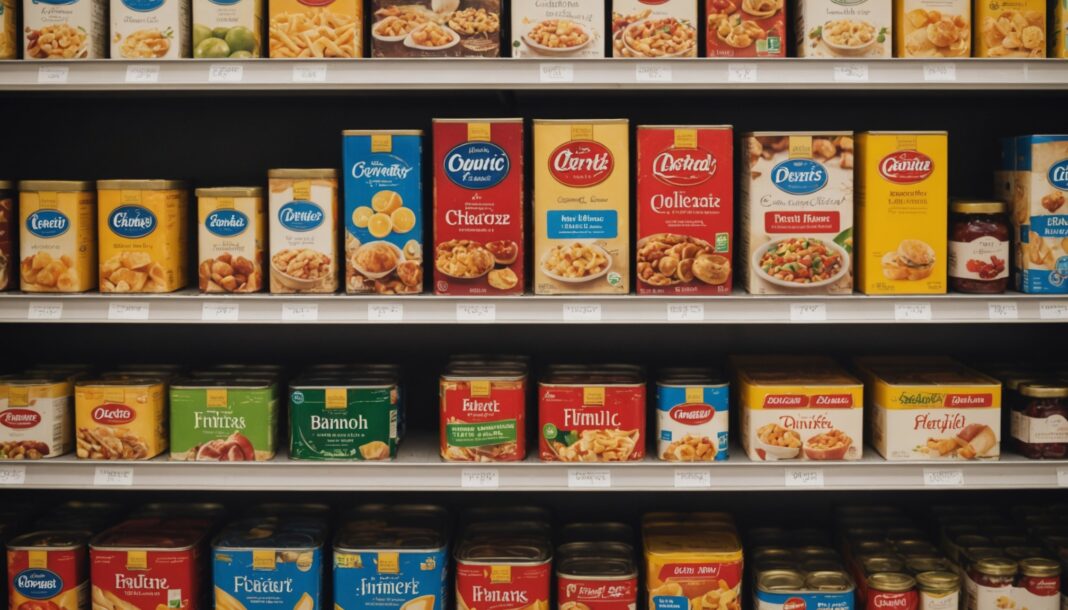
The legal basis for food labeling in France is the European INCO regulation (EU No. 1169/2011), which took effect on December 13, 2014. It requires that information be written at least in French, in a way that is fair, accurate, and not misleading to consumers. This text sets out a list of nine categories of mandatory information: the product's name, a list of ingredients in descending order of weight, net quantity, shelf-life dates, storage conditions, the manufacturer's contact details, origin when required, a nutrition table, and the presence of allergens.
- The nutrition table has been mandatory since December 2016 for all prepackaged processed foods.
- The requirement to indicate geographic origin has been strengthened in recent years, particularly for meat, fish, and certain fruits and vegetables.
- The regulation even imposes a minimum font size: 1.2 mm in height for the letter “x,” to ensure that labels are actually legible and not just legible in theory.
Fourteen Allergens to Disclose, Even in Trace Amounts
The INCO regulation lists fourteen major allergens that must be clearly highlighted in the ingredient list: gluten, crustaceans, eggs, fish, peanuts, soy, milk, tree nuts, celery, mustard, sesame seeds, sulfites, lupin, and mollusks. This requirement applies even when the allergen is present in only a tiny amount. Inspections carried out by the DGCCRF (France's General Directorate for Competition Policy, Consumer Affairs and Fraud Control) have nevertheless revealed a significant rate of non-compliance on this specific point, particularly for products sold loose or unpackaged, where allergen information is sometimes missing or incomplete.
Conversely, the phrase “may contain traces of…,” found on many packages, remains purely voluntary. No law requires a manufacturer to include it, which leaves some uncertainty for the most sensitive consumers, who must contact brands directly whenever they have doubts.
Nutri-Score: Popular, But Still Optional
Another point that is often misunderstood: Nutri-Score, like the Eco-Score that sometimes accompanies it, is not subject to any legal requirement in France. It is a voluntary scheme that brands may choose to display on their packaging or not. France cannot unilaterally impose it on all products sold within its territory, since the rules of the European single market strictly limit what each member state can make mandatory on its own.
Penalties That Can Reach 1.5 Million Euros
Failing to comply with these requirements is not without consequences. In cases of clear-cut deception regarding a product's composition, origin, or quality, a company risks a fine of up to 1.5 million euros. Consumers also have a tool for reporting questionable or incomplete labeling: the SignalConso platform, run by the DGCCRF, which triggers inspections when several reports converge on the same product or the same retailer. To learn more about the options available to consumers, the magazine's Law and Justice section regularly covers these practical recourse issues.
While labeling plays a central role in shopping habits, it is also part of broader concerns tied to consumption and purchasing power, as well as the health vigilance covered in our Health and Medicine section, particularly for people with allergies or intolerances.
Frequently Asked Questions
Will Nutri-Score Become Mandatory in France?
No, as of now no law makes it mandatory. Its adoption remains a voluntary step for brands, since France cannot impose it alone without approval at the European level.
What Should You Do If a Product Doesn't Clearly List an Allergen?
Consumers can report the problem through the DGCCRF's SignalConso platform, which centralizes alerts and can trigger an inspection if several reports concern the same product.
Do Products Sold Loose Also Have to Follow These Rules?
Yes, allergen requirements also apply to unpackaged products, even though DGCCRF inspections show that this segment is precisely where violations are most common.
Sources
- Citizenpost — Food Labeling Regulation in France
- economie.gouv.fr / DGCCRF — Food Labeling: The Rules You Need to Know
- State Services in the Gard Department — Mandatory Food Labeling Information
Tomato Harvest Takes a Hit: Intermarché Bets on Misshapen Produce
The heat wave and drought that marked the summer of 2026 are leaving their mark on produce aisles in France. The tomato harvest has dropped by about 30% and lettuce has become scarcer, forcing retailers to rethink their supply habits.…
Vegan Flavor Awards: PETA France's 2026 Rankings Unveil New Winners
This week once again, PETA France revealed new faces of its 2026 Vegan Flavor Awards, with a bakery-pastry shop in Aix-en-Provence and a plant-based aperitif specialist in the Pas-de-Calais freshly honored. It's a good opportunity to take stock of this…

Wonka Lands on French Shelves: Ferrero Bets on Sweet Nostalgia
After months of rumors, Wonka is officially making its big comeback on French shelves. The Ferrero group, which already owns Nutella, Kinder, and Delacre, has just unveiled a candy range entirely inspired by the world of Charlie and the Chocolate…
Food Contaminants: What France's New Anses Reference Study Reveals
Acrylamide, lead, mercury, cadmium, aluminum: the French Agency for Food, Environmental and Occupational Health & Safety (Anses) has just released the first results of its third total diet study (EAT3), a landmark effort that measures what French people actually absorb…
Cap d'Ona: The Catalan Brewery Crowned Best Beer in the World
In the Pyrénées-Orientales region, an artisanal Catalan brewery has once again lifted France to the top of the world's brewing scene. Cap d'Ona, based in Céret, was named best beer in the world in the rye beer category at the…
Listeria in Ready-to-Eat Foods: EU Regulations Tighten
A new European text is changing the rules for the safety of ready-to-eat foods. Starting July 1, 2026, Regulation (EU) 2024/2895 replaces the previous framework governing the bacterium Listeria monocytogenes, with stricter rules for manufacturers and distributors. Tartares, pastries, ice…

Unsold Food: What the New EU Regulation Changes for the Food Industry
Since July 19, 2026, companies that manufacture, process, distribute, or import food products in Europe can no longer destroy their unsold goods without following precise rules. Regulation (EU) 2026/296, adopted on February 9, 2026, now strictly governs a practice that…
Early Grape Harvests: Why the Heat Wave Is Upending French Winemakers' Calendar
In France's vineyards, the summer of 2026 will go down as a season of records. Driven by a historic heat wave and significant drought, early grape harvests are multiplying across the country: some winemakers began picking as early as the…
This article was written with the help of artificial intelligence. Editorial policy