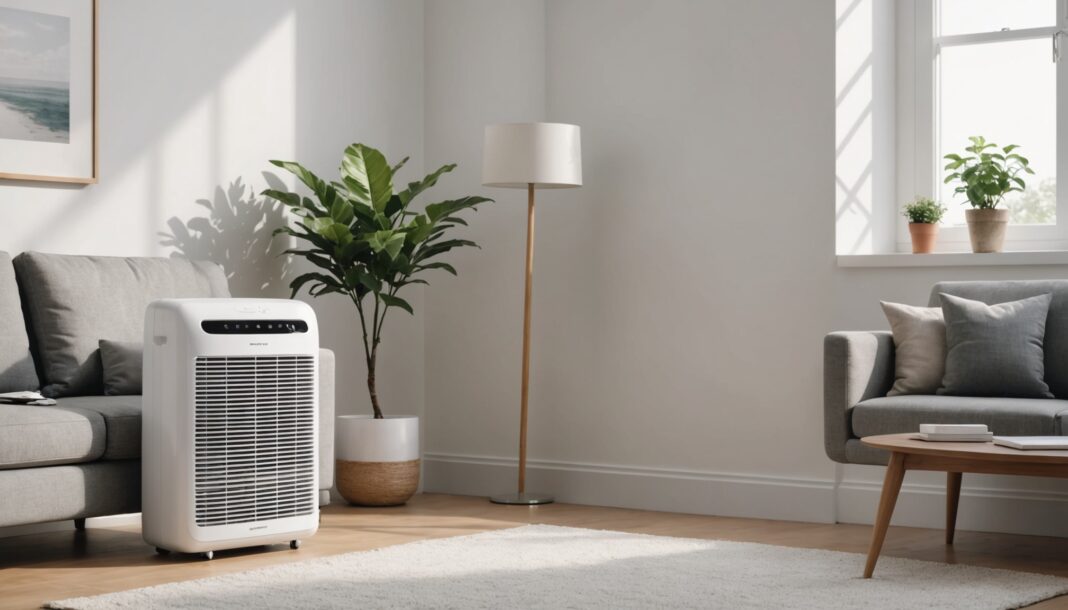

As soon as the first heat waves hit, many households look for a quick cooling solution, without renovation work or a fixed installation. That's where the portable air conditioner comes in, a standalone unit that just needs to be plugged in and connected to a window with its exhaust hose. Before deciding, comparing the models available in a retailer's catalog like Lowe's helps you get a sense of the prices and power ratings offered for a portable air conditioner, before focusing on the technical criteria that will really make a difference in everyday use.
Monobloc or Split: Which Technology Should You Choose?
Two main families share the market. The monobloc model packs all the mechanics into a single cabinet placed on the floor, connected to the outside by a simple flexible hose: it's the easiest solution to install, sufficient for cooling a room for a few days a year during a heat wave. The portable split model, on the other hand, separates the indoor unit from its outdoor compressor, linked by a thinner duct: for equal power, it is generally 20 to 30% more efficient, since it limits the loss of cool air caused by the large hot-air duct that runs through the window on a monobloc unit. To refine this choice, our article on the key criteria for choosing the right air conditioner details the points to check before buying.
Electricity Consumption: What the Energy Rating Reveals
The downside of a portable air conditioner's convenience is its electricity bill. A Class A unit consumes on average between 1,500 and 2,500 watts per hour, which translates to a cost of between 0.38 euros and 0.63 euros per hour to cool a room of 16 to 30 square meters. Over a month of heavy use, the bill can exceed 130 euros, roughly 2.5 times more than a fixed air conditioner and nearly 30 times more than a simple fan, according to figures from ADEME (the French agency for ecological transition). This makes it worth checking the energy label before buying rather than rushing to grab the first available model in the middle of a heat wave. Once the unit is installed, regular maintenance remains essential to keep this level of performance; we detail the steps to follow in our guide on properly maintaining your air conditioner.
Installation Mistakes That Hurt Performance
Many owners complain that their portable air conditioner “cools poorly,” when the problem almost always comes from its exhaust hose. A duct that is too long, bent, or installed with sharp turns slows the removal of hot air and drives up consumption. Another common pitfall: a window opening that isn't properly sealed around the hose, which lets hot air flow right back into the room. As a result, poorly controlled air leaks at the exhaust point can increase electricity consumption by 15 to 20%. To avoid this, it's best to place the unit near a window or door, keep the hose as short and straight as possible, and never connect it to a mechanical ventilation system (VMC), which isn't designed to remove hot, humid air.
What to Check Before You Buy
- Power, expressed in BTU or watts, which should match the room's size and sun exposure;
- The energy rating, which directly affects your electricity bill;
- The noise level, especially important for use in a bedroom;
- The overall budget, which sometimes includes installation costs to plan for;
- The dehumidifier or heating function, useful for making the purchase worthwhile across several seasons.
On this last point, the budget for a portable air conditioner remains significantly lower than that of a fixed installation: our article on the budget to plan for an air conditioning installation lets you compare the two options.
Frequently Asked Questions
Is a portable air conditioner effective during intense heat?
Yes, for cooling a single room over a short period, but its effectiveness remains lower than that of a fixed air conditioner, especially in large spaces or during prolonged heat waves.
Do you have to drill through a wall to install it?
No, a monobloc or portable split model simply connects to a window or a partially open door using its exhaust kit, with no permanent construction work.
How much does it cost to run a portable air conditioner per year?
This depends heavily on how often it's used and the unit's energy rating, but heavy use over a summer month can amount to more than 130 euros in electricity for a Class A model.
Sources
- ADEME — Limiting Air Conditioning Electricity Consumption
- UFC-Que Choisir — Portable Air Conditioner Buying Guide
- Habitatpresto — How to Vent Hot Air from a Portable Air Conditioner
This article was written with the help of artificial intelligence. Editorial policy