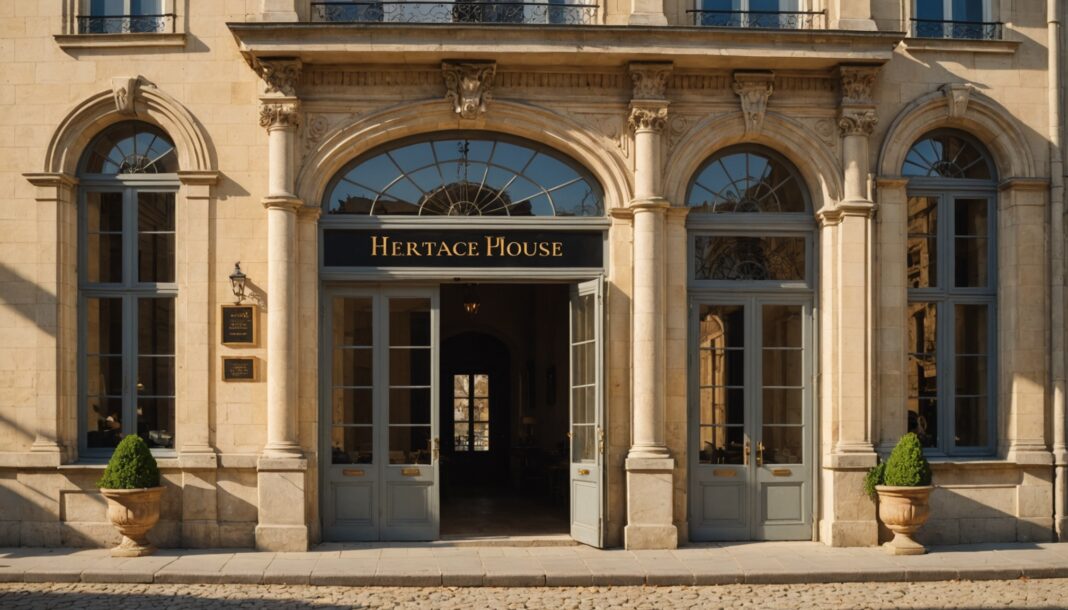

Once a year, doors that never open to the public swing wide: the Élysée Palace, Matignon, government ministries, listed private gardens. These are the European Heritage Days, and this year's 43rd edition falls on a double anniversary that shakes up the usual routine a bit. Here's what you need to know before diving into the program.
Two Days, Plus a Friday for School Groups
This edition actually spans three days: Friday is reserved for school groups, while the general public is invited on Saturday and Sunday. The vast majority of the more than 17,000 sites open across France that weekend are free of charge, with hours typically running from 10 a.m. to 6 p.m. Some major cities — Paris, Lyon, Marseille, Bordeaux, Strasbourg — are also offering exceptional evening openings, a rare chance to see a landmark in a different light.
The Heritage of Photography, Star of This Edition
This year's national theme is no coincidence: it celebrates the bicentennial of the invention of photography by Nicéphore Niépce in 1826. In practical terms, that means exhibitions, workshops, and behind-the-scenes visits to photographic collections usually kept out of public view. Many sites are taking the opportunity to bring out archives that are rarely shown.
A Second, More Somber Theme: Heritage at Risk
Alongside photography, the European theme shared by all participating countries is titled “Heritage at Risk: React, Resist, Reinvent.” It highlights sites threatened by time, natural disasters, conflict, or climate change — a subject that echoes exhibitions already on view this summer, such as the one devoted to heritage under threat, from Timbuktu to Odessa, at the Cité de l'architecture et du patrimoine (France's national architecture and heritage museum, in Paris).
What's Really Different This Year
- Three days instead of two, thanks to the Friday school day;
- Exceptional access to halls of power such as the Élysée or Matignon, depending on the year and availability;
- Evening openings in several major cities, in addition to the usual hours;
- A program available online from mid-August, filterable by location, theme, or accessibility.
The full program, updated as local announcements come in, can be found on the event's official website; town halls often publish their own list of nearby open sites as well.
How to Plan Your Visit
With 17,000 sites spread across the country, it's better to arrive with a plan than to improvise on the spot. A few simple habits can save you disappointment: check whether the site requires a reservation (some iconic spots sell out within hours), aim to arrive early in your time slot for the most popular places, and look toward small towns rather than just big cities, where equally striking discoveries often await with far shorter lines. To plan a family outing or an unusual weekend, our travel and tourism section is packed with ideas, as are our local and national news pages for following announcements throughout the summer, along with our lifestyle and trends section for the latest cultural tips.
Frequently Asked Questions
Do you have to pay to visit sites during Heritage Days?
No, admission is free at the vast majority of participating sites. Only certain specific activities, guided tours, or workshops may remain paid or require advance booking.
Can you really visit the Élysée or Matignon?
These locations are among the addresses that occasionally open their doors for this occasion, but access remains limited in the number of spots available and subject to strict security conditions; it's best to check the official program as soon as it's published for the exact details.
Where can you find the full program near you?
The official European Heritage Days website publishes a search tool by city, theme, and accessibility starting in mid-August; local town halls and tourist offices also share the list of open sites in their area.
Sources
- Ministry of Culture — preliminary program for the 43rd European Heritage Days
- Centre des monuments nationaux — European Heritage Days 2026
- Sortiraparis — The historic monuments to visit in Paris and the Île-de-France region
Fall Literary Season: 461 Novels, Fewer Foreign Novels, and a Packed Awards Calendar
The 2026 “rentrée littéraire” (France's fall literary season) is in full swing in French bookstores, with the usual lineup of highly anticipated new releases. But behind the buzz around the fall display tables, this season's numbers tell a more nuanced…
City Hall Fire: How a Monument Gets Emergency Protection
Can a public building become a historic monument within just a few days of a disaster? That is exactly what just happened in Limoges, where the city hall, largely destroyed by a fire on October 17, was placed under emergency…
Paris's Fall Cultural Season: The Must-See Exhibitions This Autumn
After a summer marked by heat and free open-air exhibitions, Paris is kicking off its fall cultural season with a particularly packed exhibition calendar. The Grand Palais, the Petit Palais, the Musée d'Orsay, the Musée de l'Orangerie, and the Musée…
The National Museum of Natural History Celebrates 400 Years with a New Exhibition
It's turning 400 years old and has never looked younger: the National Museum of Natural History (the Muséum national d'Histoire naturelle) opens its biggest exhibition of the season on September 23, 2026, “Artists at the Museum,” in the Grande Galerie…
François Morellet Exhibition: Final Weeks to See the Metz Retrospective
There are fewer than three weeks left to see one of the most ambitious exhibitions of the year in France: the François Morellet exhibition presented at the Centre Pompidou-Metz. Titled “100 Percent,” it closes its doors on September 28 and…

Nicolas Flamel: Cluny Museum Debunks the Myth of the Alchemist
In the popular imagination, Nicolas Flamel is an immortal alchemist, keeper of the secret of the philosopher's stone and the elixir of life. The reality is quite different: through January 24, 2027, the Cluny Museum in Paris is devoting an…
Pass Patrimoine: How to Visit 500 Monuments With One Subscription
A new tool is about to shake up the habits of history buffs and museum lovers alike: the Pass Patrimoine opens access to nearly 500 monuments across France for a single annual subscription. Backed by the Fondation du patrimoine (France's…
This article was written with the help of artificial intelligence. Editorial policy