



Since August 1, 2026, the Livret A rate (France's flagship tax-free savings account) has risen from 1.5% to 1.7%, an increase adopted on the recommendation of the governor of the Banque de France (France's central bank) and approved by the Minister of the Economy. The Livret de développement durable et solidaire (LDDS), fully indexed to the Livret A, benefits from the same adjustment. This announcement, which affects tens of millions of French savers, is worth a closer look at how it's calculated and what it means in practice.
A Rate Hike Dictated by the Legal Formula
The Livret A rate is reviewed twice a year, in February and August, according to a formula that factors in inflation excluding tobacco over the past twelve months as well as the average interbank rates in the eurozone. Over the first half of 2026, inflation excluding tobacco averaged 1.52%, compared with 0.88% in the second half of 2025. This uptick in prices mechanically explains the rate increase, without any discretionary “boost” being applied: the Banque de France and the government chose to strictly apply the calculation formula, as had already been the case in previous reviews.
The new 1.7% rate will remain in effect until the next review, scheduled for early February 2027. This marks the first rate increase after several half-year periods marked by a rather downward trend, driven by the decline in inflation seen in 2025.
The LEP Kept Above Its Theoretical Rate
Another notable decision: the Livret d'épargne populaire (LEP), a savings account reserved for lower-income households, has had its rate kept at 2.5%, even though the calculation formula would have brought it down to 2.2%. The government chose to make an exception in order to keep supporting the savings power of the most vulnerable households, a practice already used in previous reviews to smooth out the effects of the automatic formula.
This gap between the Livret A and the LEP illustrates the limited but real leeway available to the government: while the formula applies in theory, political adjustments remain possible, particularly to protect low-income savers at a time when food and energy prices continue to weigh on household budgets.
What This Actually Means for Savers
In practical terms, a saver with €10,000 in their Livret A will now earn about €170 in interest over twelve months, compared with €150 previously—an extra €20 a year on that amount. Interest on the Livret A and the LDDS remains completely exempt from income tax and social security contributions, which continues to make them the go-to precautionary savings products for French households, despite real returns that are often close to, or even below, inflation observed over certain periods.
- Livret A and LDDS: rate raised to 1.7% as of August 1, 2026
- Livret d'épargne populaire (LEP): rate kept at 2.5%
- Next review: early February 2027
- Interest still exempt from income tax and social security contributions
For households looking to secure some precautionary savings, this increase remains modest but welcome, at a time when many other fixed expenses are climbing faster. Find more economic analysis in our local and national news section, as well as our regular breakdowns of the regulatory changes affecting everyday life in France.
Frequently Asked Questions
Will the Livret A rate rise again?
There's no way to say for certain: the next review, scheduled for early February 2027, will depend on how inflation excluding tobacco and interbank rates evolve between now and then. If inflation keeps holding around its current level, either another increase or a stable rate are both possible.
Should you prioritize the LEP over the Livret A?
The LEP, reserved for lower-income households that meet income requirements, remains more rewarding with a 2.5% rate compared with 1.7% for the Livret A. Eligible households therefore have every reason to prioritize this account before topping up with a Livret A or an LDDS once the LEP's cap is reached.
Has the Livret A cap changed too?
No, this August 2026 review only concerns the interest rate. The Livret A's deposit cap remains set at €22,950 for individuals, not counting accrued interest, which can push the balance above that limit.
Sources:
French Ministry of the Economy and Finance —
info.gouv.fr —
La finance pour tous

Thunderstorms: 39 Departments Under Orange Alert as Hail and 100 km/h Gusts Loom
Météo-France has placed 39 departments under orange thunderstorm alert this Thursday afternoon, with a marked risk of hail, heavy rain, and wind gusts. This episode serves as a reminder, just days before the start of the school year, that the…
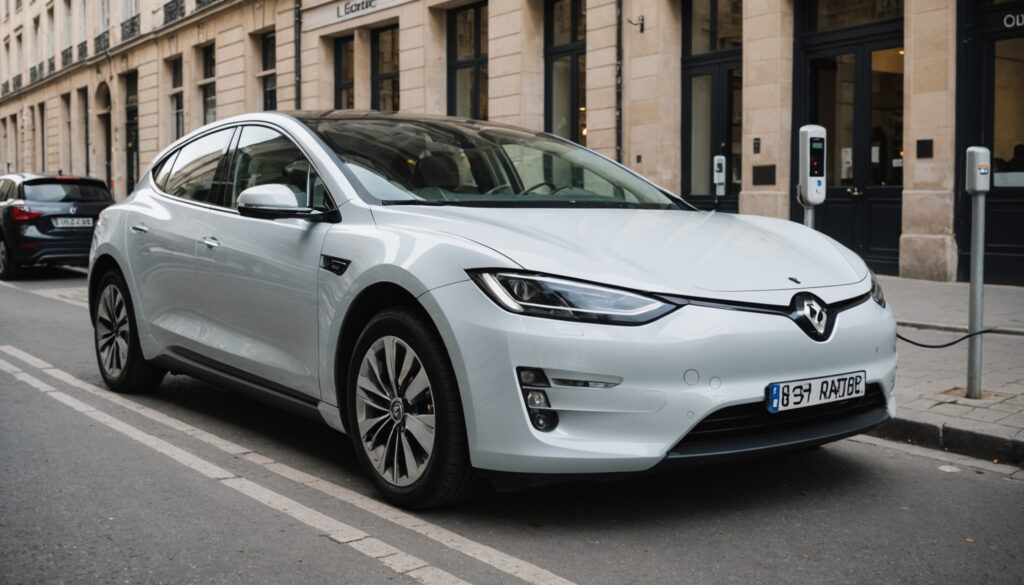
Used Electric Car: A New €337 Incentive—What Are the Conditions?
A new financial incentive is now available to support the purchase or lease of a used electric car. Funded by energy savings certificates (CEE) rather than the state budget, this incentive took effect on September 1, 2026, and applies to…

Family Gifts: Notaries Propose Cutting Gift Tax in Half
What if passing on your wealth while you're still alive cost half as much? That's the proposal put on the table on September 10 by the Conseil supérieur du notariat (the French Higher Council of Notaries): cut in half the…

Meal Vouchers at the Supermarket: What's Now Permanent for Your Grocery Shopping
French meal vouchers will be able to keep covering grocery shopping at supermarkets: on October 12, 2026, the French National Assembly unanimously passed a bill that turns what had until now been only an exceptional allowance into a lasting rule.…

Cyberattack Hits France's Education Ministry: Back-to-School Disrupted in Several Districts
A cyberattack of unprecedented scale has hit France's Ministry of Education just days before the start of the school year. Claimed by a group of hackers, the intrusion affects millions of student and staff records, and complicates back-to-school preparations in…

RER B: The Future Train That Wants to End Rush Hour Hassles
Anyone who fumes every morning on a packed RER B platform has some good news to chew on: the line is about to change its face. A prototype of the future train, named MI20, took its first test run on…

Mandatory Helmets for Electric Scooters: France Reorganizes City by City
Since September 1, the same act changes legal status depending on which sidewalk you're riding on: in Nord, Pas-de-Calais, Paris, or Villeurbanne, the mandatory helmet for electric scooters has just taken effect, without any national law requiring it. The result…

Unemployment Rate in France: What Insee's Numbers Show
The unemployment rate in France stands at 8.2% of the labor force in the third quarter of 2026, according to the latest figures published by Insee (France's national statistics institute). A near-stable level compared with the previous quarter, but one…
This article was written with the help of artificial intelligence. Editorial policy